
Pump impellers
Closed and open impellers where the curved vanes and the internal flow path are formed by the pattern, with the hub faces, bore and wear surfaces machined afterwards.
Passage shape, hub bore and balance
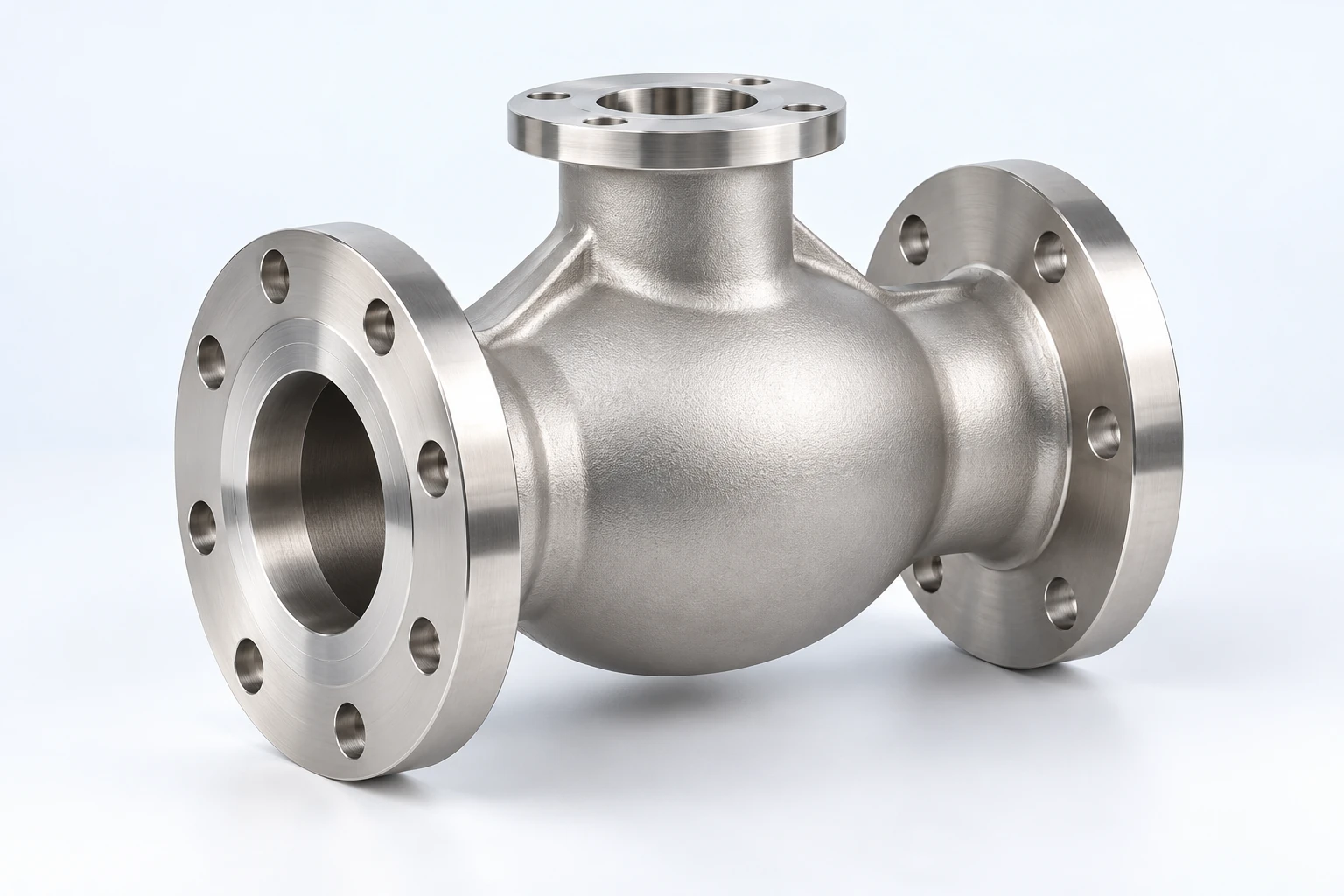
Stainless steel investment castings for pump impellers, valve and fluid-handling components, process equipment parts and industrial hardware, formed from a wax pattern close to final shape and reviewed against the drawing, purchasing specification and inspection requirement that apply to the project.
Casting grade, heat treatment, delivery condition and acceptance come from the purchasing specification and the drawing. This page states no grade equivalence and no food-contact or pressure certification.
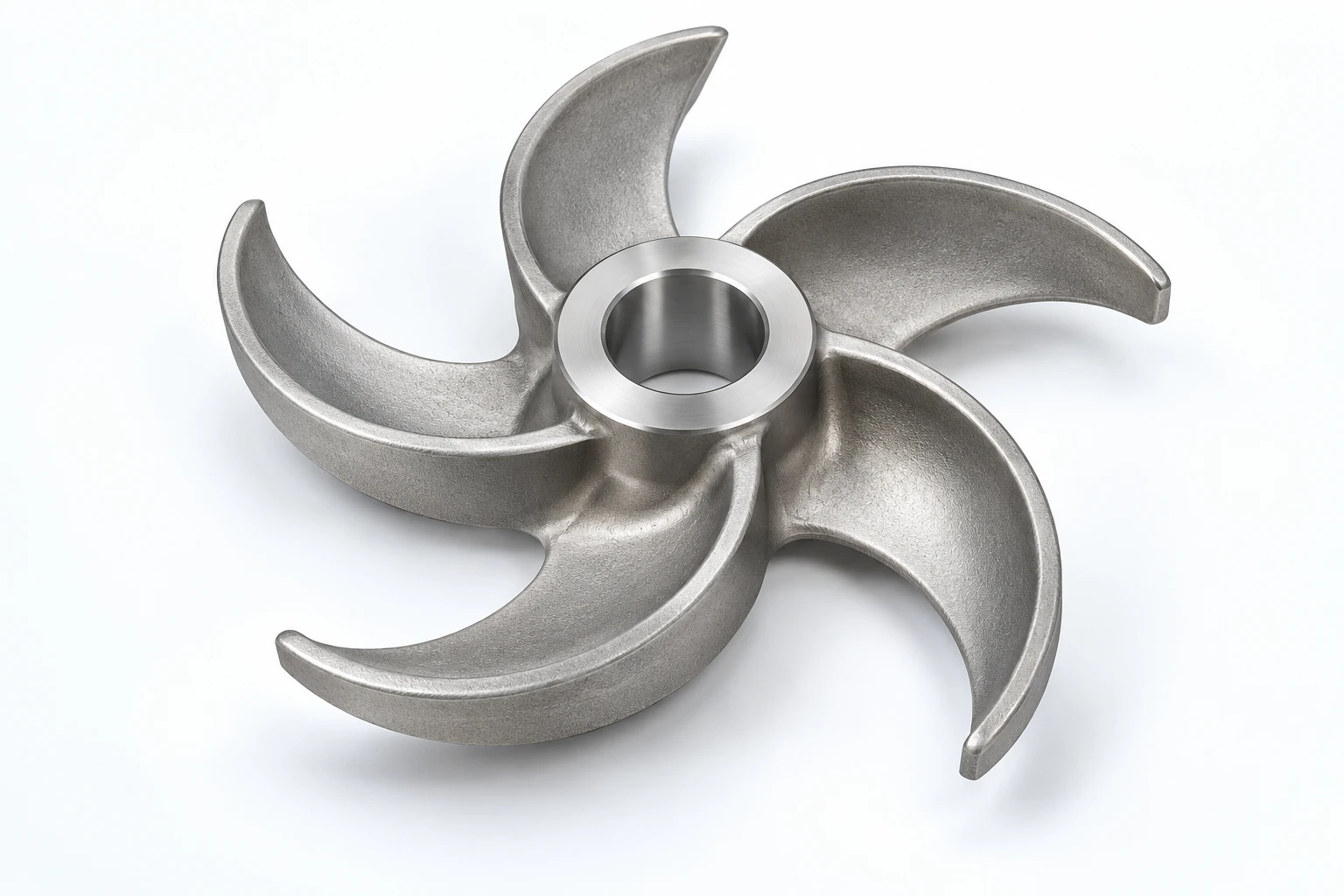
A stainless investment casting starts as a wax pattern. The pattern carries the geometry, so an impeller vane, a valve passage or a manifold branch is formed by the shell around it rather than cut out of solid afterwards. That is the reason the process is chosen: internal and curved flow paths that a cutter cannot reach are produced in one piece.
What the process does not deliver is a finished part. A cast surface is not a datum. The hub, the bore, the flange face, the seal seat, the thread and the fastener hole are machined from stated datums and accepted on the drawing revision that will be inspected.
So the review separates two questions. The first is the shape the pattern can deliver, including the wall section and the transitions between sections. The second is the set of surfaces that have to be cut afterwards, and whether the tool can reach them without touching a face that has to stay as cast.
Each group below is a part family rather than a stocked item. The review point named with it is the one that usually decides the machining route.
Closed and open impellers where the curved vanes and the internal flow path are formed by the pattern, with the hub faces, bore and wear surfaces machined afterwards.
Passage shape, hub bore and balance
Bodies, bonnets, discs, seat rings and clamps where the internal passage and the ports are cast, while the flange faces, seat and stem bore are machined to the interface.
Wall section at the port, seat alignment
Mixer and agitator components, pump casings, housings, nozzles and replaceable wear parts for equipment that is assembled and serviced on site.
Mounting datums, flange pattern, wear face
Fork-shaped parts, levers, links, brackets and cleats where a shaped body is cast near net shape and the bores, slots and pin holes are machined for the joint.
Fork bore alignment, hole position
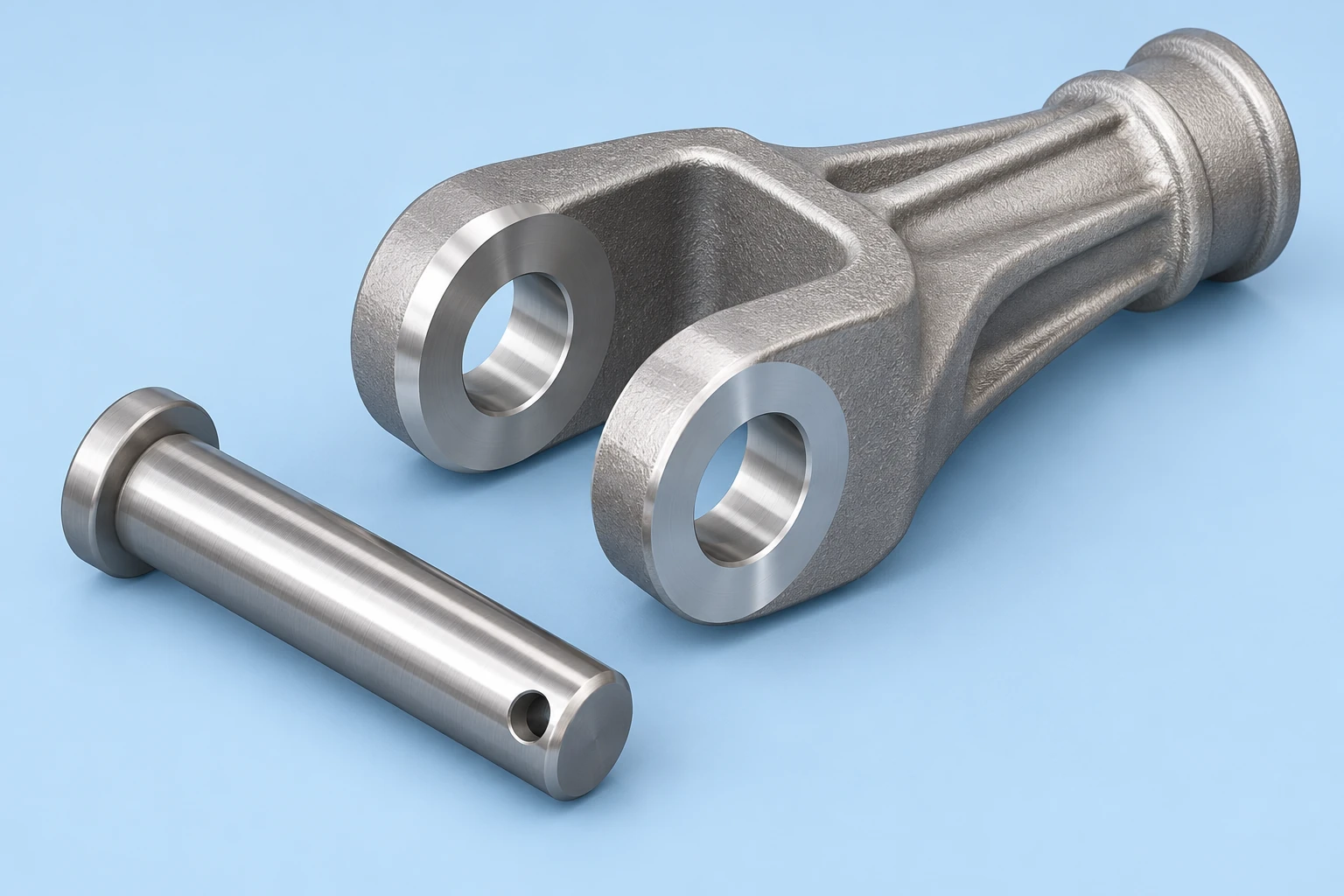
The flow path and the outside form are produced by the casting. The surfaces that position the part, carry the fit or seal the joint are cut afterwards, from a stated datum.
As cast
Machined faces
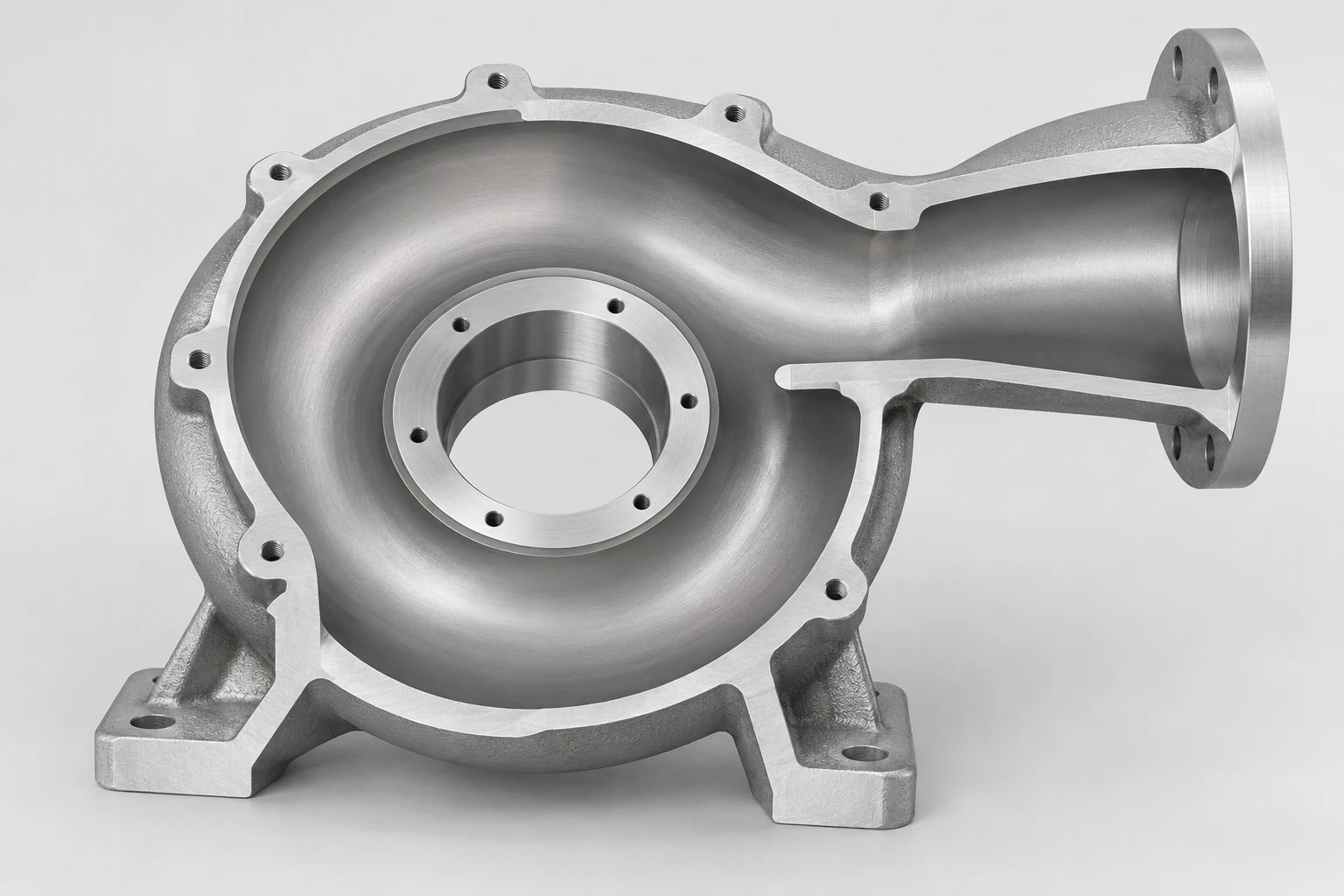
Once a passage is formed by the shell, there is no second operation inside it. The checks that matter therefore happen at the pattern and at the drawing, not at the machine.
The comparison is about shape and where the cost sits, not about which process is more advanced. A part can also be a casting with machined interfaces, which is a third answer rather than a compromise.
The choice usually turns on where the cost sits: in the pattern and the shell, or in the machining time per part. The two are often combined — a casting that carries the form, with the interfaces machined — and that combination is quoted as one route rather than as two separate purchases.
A casting is bought against a standard, a grade and a condition. Where any of the three is left open, the acceptance cannot be written, so it is settled before the first lot.
Where a drawing cites an international standard, the number, edition and clause are taken from that document and quoted back unchanged. No equivalence between grades is asserted on this page.
The page does not carry a standing acceptance table. Which checks apply, and to what criteria, is decided by the purchasing specification, the drawing and the standard edition they cite.
Food-contact approval and pressure-vessel certification are not claimed on this page. Where a project needs a declaration, it is issued for the specific part, material and specification, and it is not extended from this description to another part.
These inputs come from the drawing and the purchasing specification. The pattern, the machining route and the inspection plan follow from them, and the price follows the route.
Both files, and which one governs where they disagree. The revision that will be inspected has to be named on the enquiry.
The first lot, the repeat demand behind it and how the orders are expected to be placed. The volume is what decides whether a pattern is justified.
The grade and delivery condition as the purchasing specification writes them, and what the part carries or sits in — the fluid, the temperature and the environment the project designs for.
Which passages stay as cast, which surfaces are machined, the datums, the tolerances and the machining allowance. No allowance or tolerance is assumed from a similar part.
The as-cast surface requirement, pickling or passivation, the NDT method, any pressure or leak test, the certificate and whether a first article is required.
How the part is identified, how the machined faces are protected in transit, and the date the lot is needed at the assembly point.
Where a drawing is still open, send the model and the interfaces that have to be machined first, and mark the rest as provisional. A quotation states which revision and which inputs it was based on.
The 2D drawing, the 3D model, the casting standard and grade, the delivery condition, the machined interfaces and the inspection requirement are enough to start. The reply states the pattern scope, the machining route and the acceptance plan.