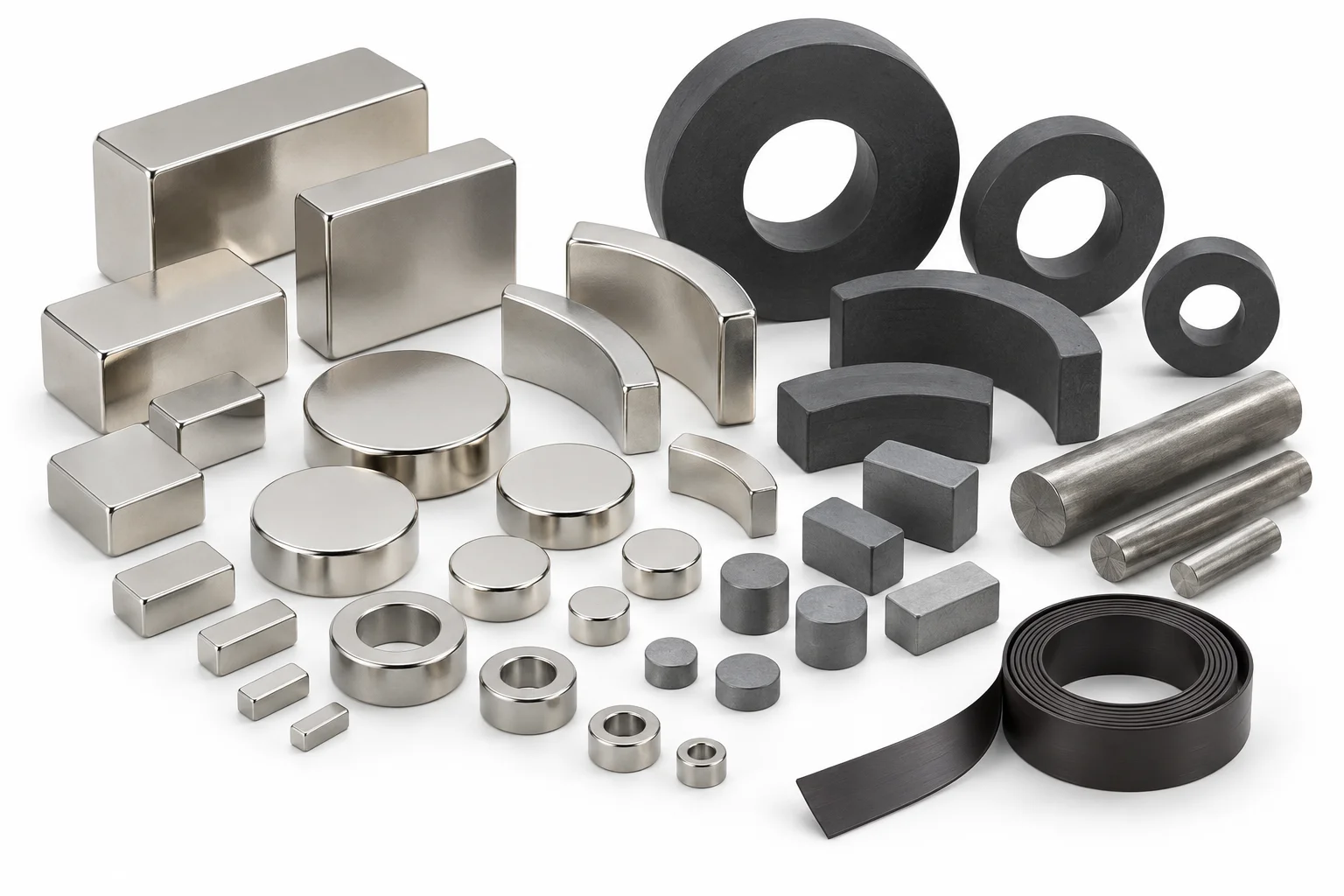
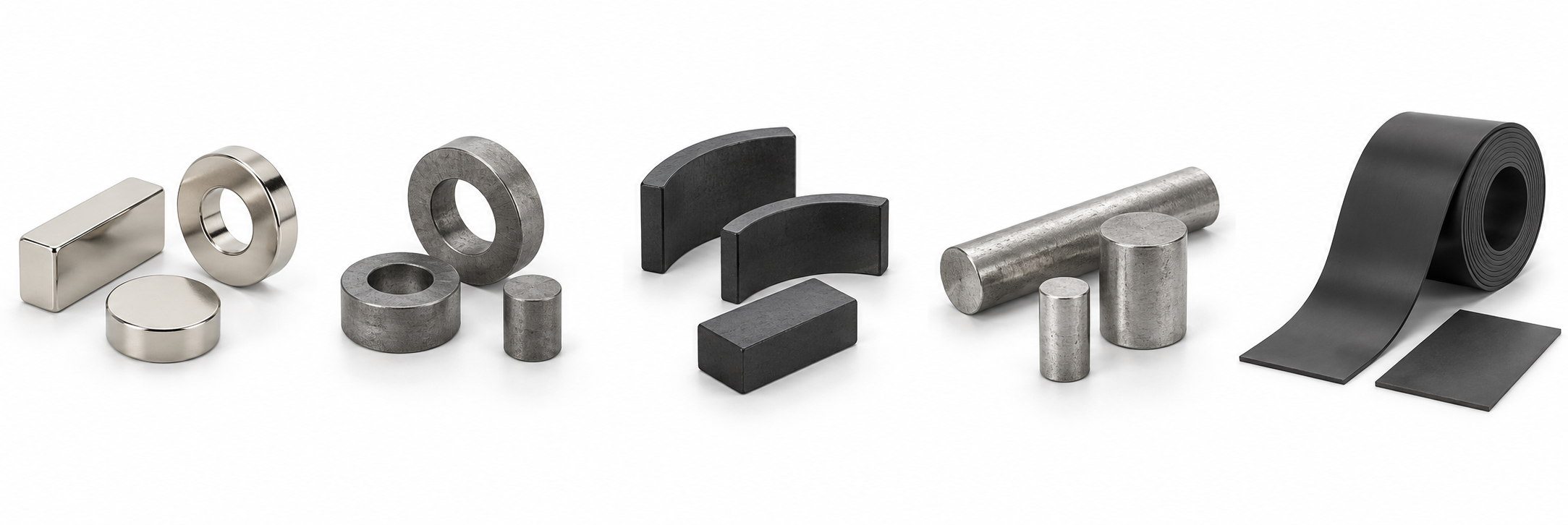
NdFeB
Review HRE-free and grain boundary diffusion options against the project specification.
Choose the material, product form and working conditions together.
Motors & motion · Sensing & positioning · Power & industrial components
Energy product, environment and cost help narrow the options.
| Material | Max Energy Product | Max Operating Temp | Corrosion Resistance | Relative Cost | Best For |
|---|---|---|---|---|---|
| NdFeB | Public grades through N54; see the grade data for (BH)max | See grade-specific temperature data | Low (needs coating) | $$$ | Motors, sensors, high-performance applications |
| SmCo | 16–32 MGOe | See grade-specific temperature data | Good | $$$$ | Aerospace, high-temp, corrosive environments |
| Ferrite | 1–5 MGOe | See grade-specific temperature data | Excellent | $ | Motors, speakers, separators — cost-sensitive volume |
| AlNiCo | 1–9 MGOe | See grade-specific temperature data | Good | $$ | Instruments, meters, temperature-stable applications |
| Flexible | 0.5–1.7 MGOe | See grade-specific temperature data | Good | $ | Signage, gaskets, crafts, sensors |
Properties depend on grade, geometry, operating temperature and magnetic circuit. This is a selection overview; use the material pages for complete published data and project conditions.
Dimensions, mounting and magnetization belong on the same drawing.
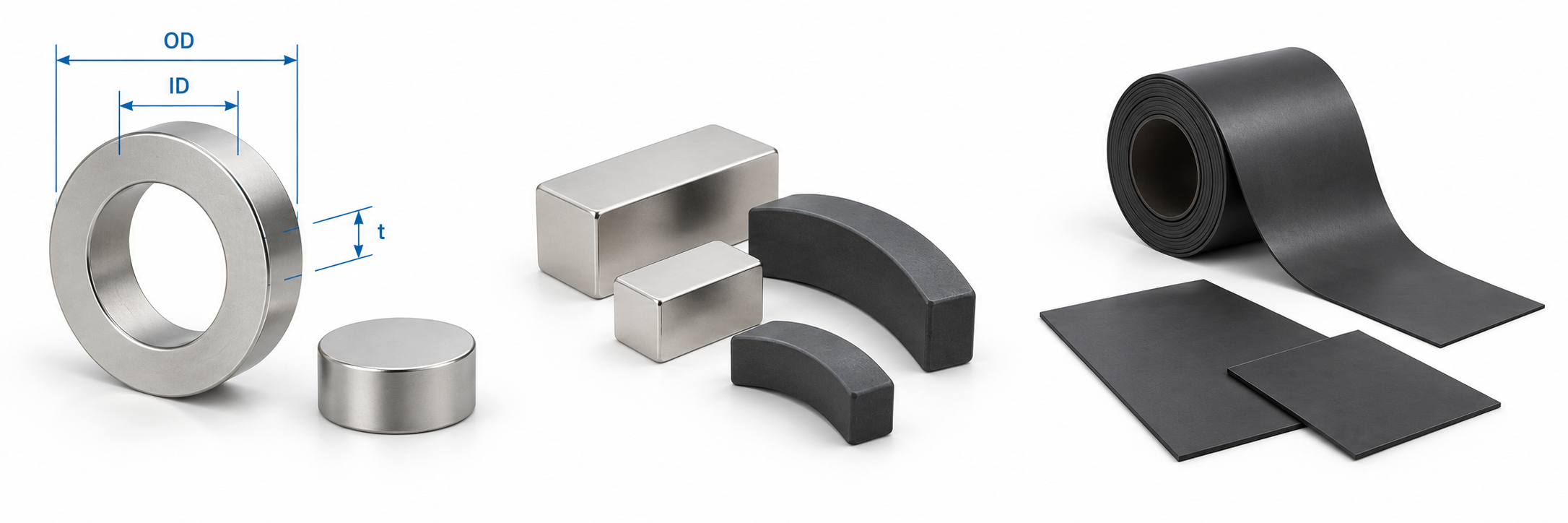
Specify outside diameter, bore and thickness, with tolerances and the intended pole direction.
Define the envelope, mating surfaces and rotor fit. Review retention and working clearance.
Choose flexible, laminated or punched formats with the mounting and surface requirements.
Geometry illustrations explain the interfaces; the approved drawing defines the manufactured part.
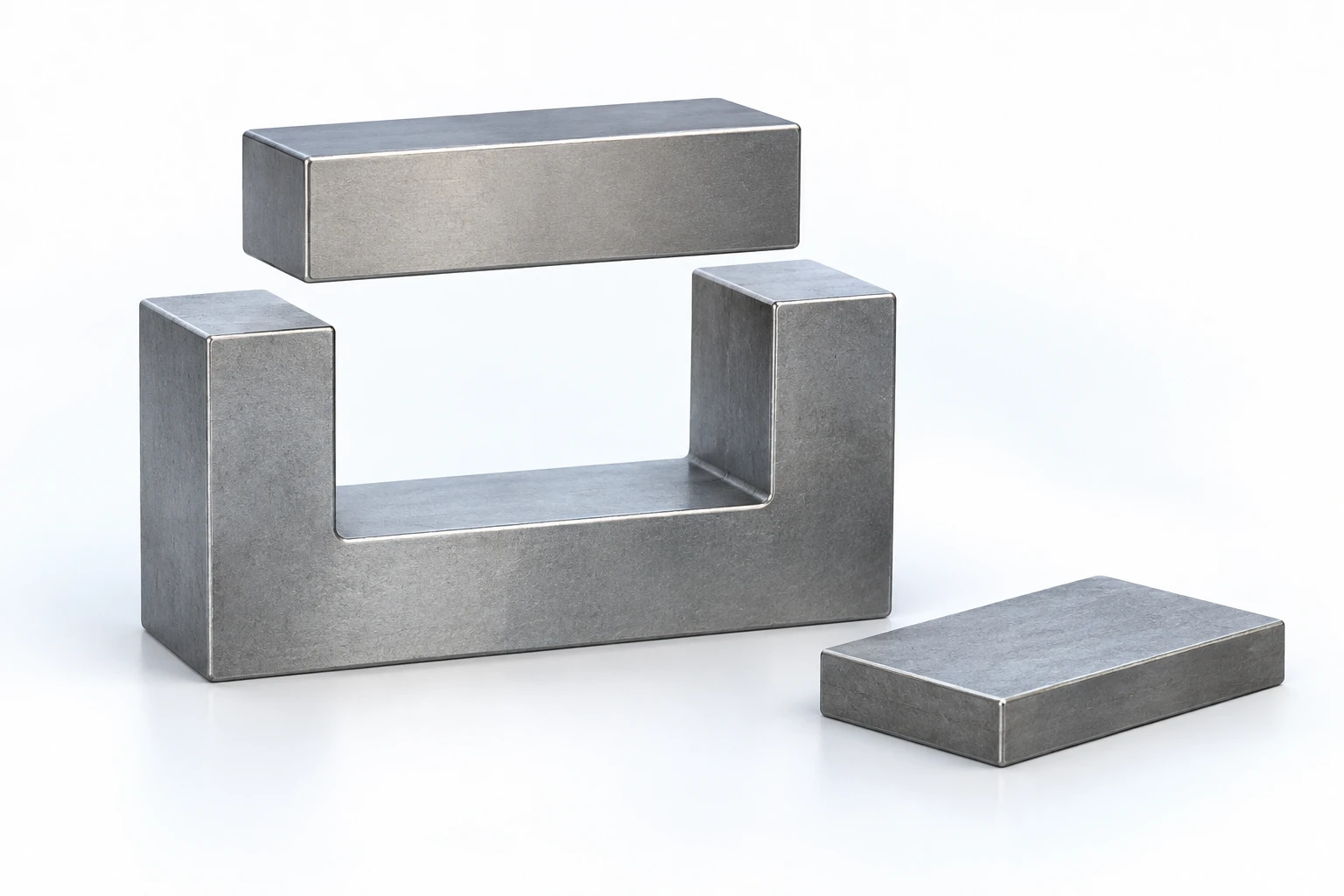
Record field or flux location, working distance, pole orientation and nearby magnetic materials. Use the same setup for sample validation.
A simplified field estimate does not establish pull force, torque or assembly performance. These require their own geometry, boundary conditions and test method.
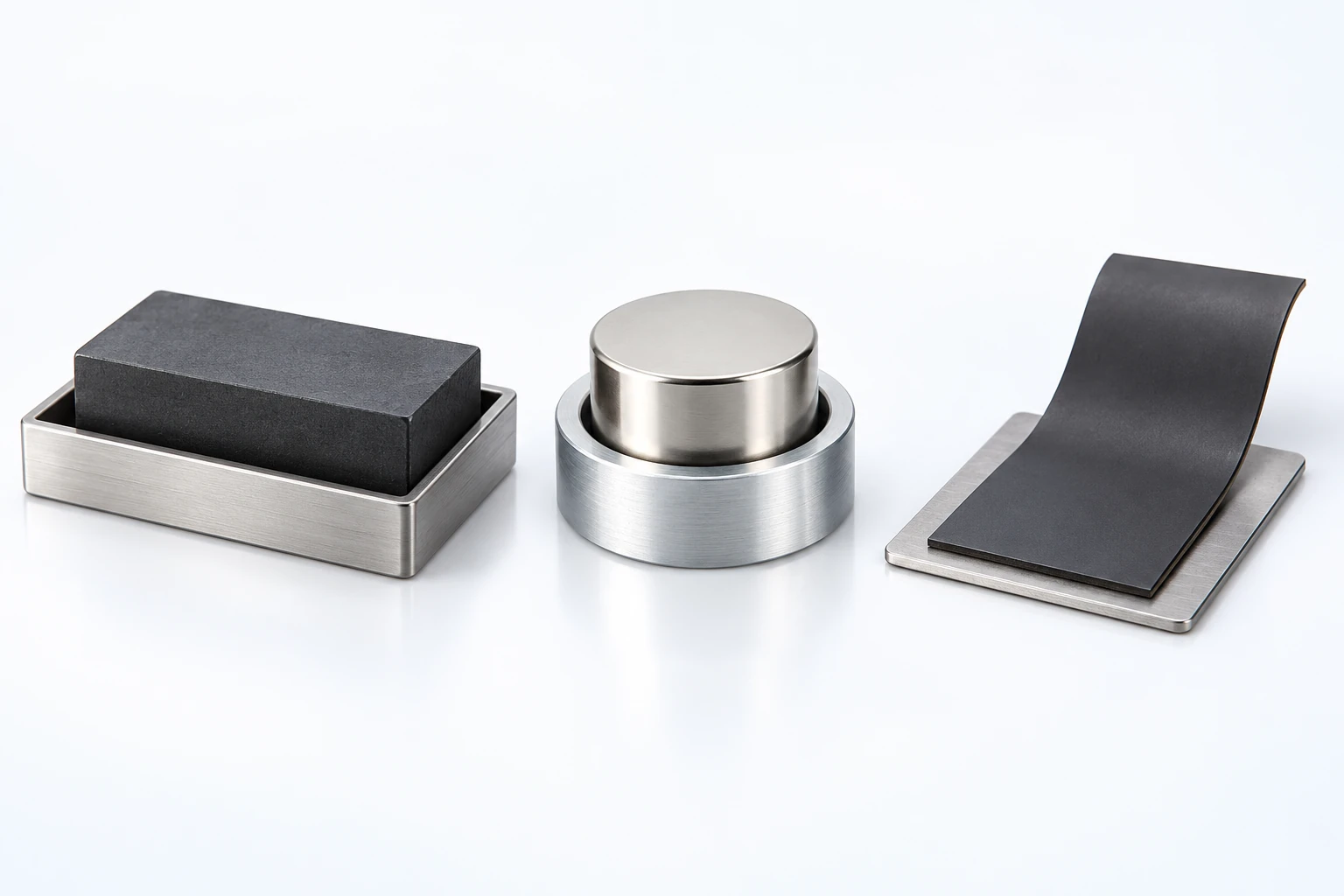
Compare corrosion exposure and required magnetic performance alongside the operating temperature and circuit.
Review HRE-free and grain boundary diffusion options against the project specification.
Use the SmCo, ferrite, AlNiCo and flexible material pages for their own published data.
Ni-Cu-Ni · Zinc · Epoxy are options to review against corrosion exposure, electrical insulation and the bonding interface. No finish provides an unconditional corrosion-resistance guarantee: agree thickness, test method, duration, specimen and acceptance criteria for the intended environment.
Conventional and GBD series, Ce-containing route and original demagnetization curves.
Keep specification names, temperature conditions and development status with each dataset.
Confirm the producing site, equipment and inspection scope for the project.
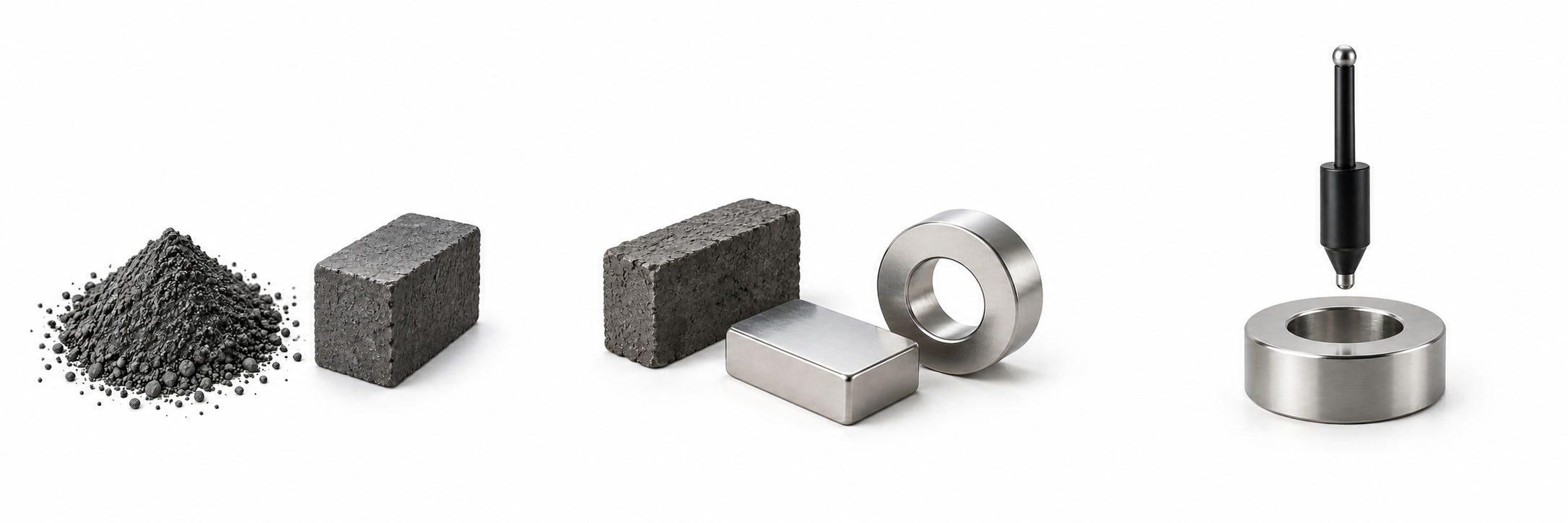
Powder mixing and pressing, with material route, orientation and forming controls.
Forming process reference
Pressing leads to sintering and post-processing where applicable. The route and finishing steps differ between material families.
Ferrite process reference
Define test position and the acceptance method.
Quality & test equipment
Owned magnetic and LTCC production is complemented by strategic metal-manufacturing bases. The producing site, equipment and inspection scope are agreed for each project.
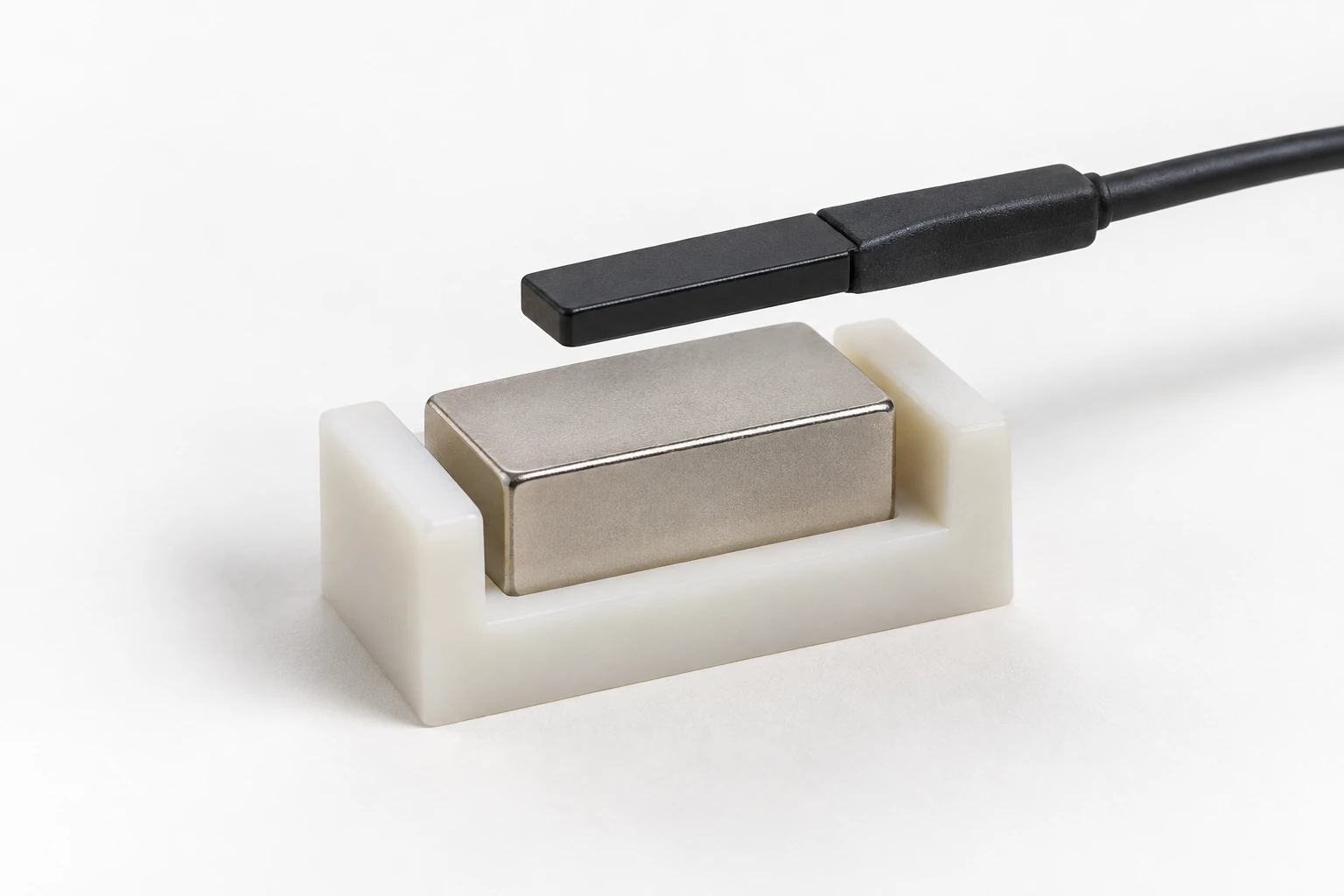
Agree critical characteristics, process controls and the evidence needed for approval.
Material route, orientation, surface treatment and assembly interface.
Drawing revision, magnetic performance, test conditions and sample approval.
A sketch is enough to start. Include the conditions that determine the material.
Drawing or sketch with critical dimensions and tolerances. Br / Hcj / (BH)max targets or application. Continuous and peak temperature, working distance and opposing field.
Humidity, salt exposure, chemicals, coating and bonding interface. Specify test method, duration, specimen and acceptance criteria for any salt-spray or humidity test.
Prototype, pilot and production quantities plus annual volume. Destination and Incoterms. Magnetization: axial, radial, diametric or multi-pole.
Drawing revision, critical characteristics, inspection sampling and sample approval criteria. Required delivery milestones.
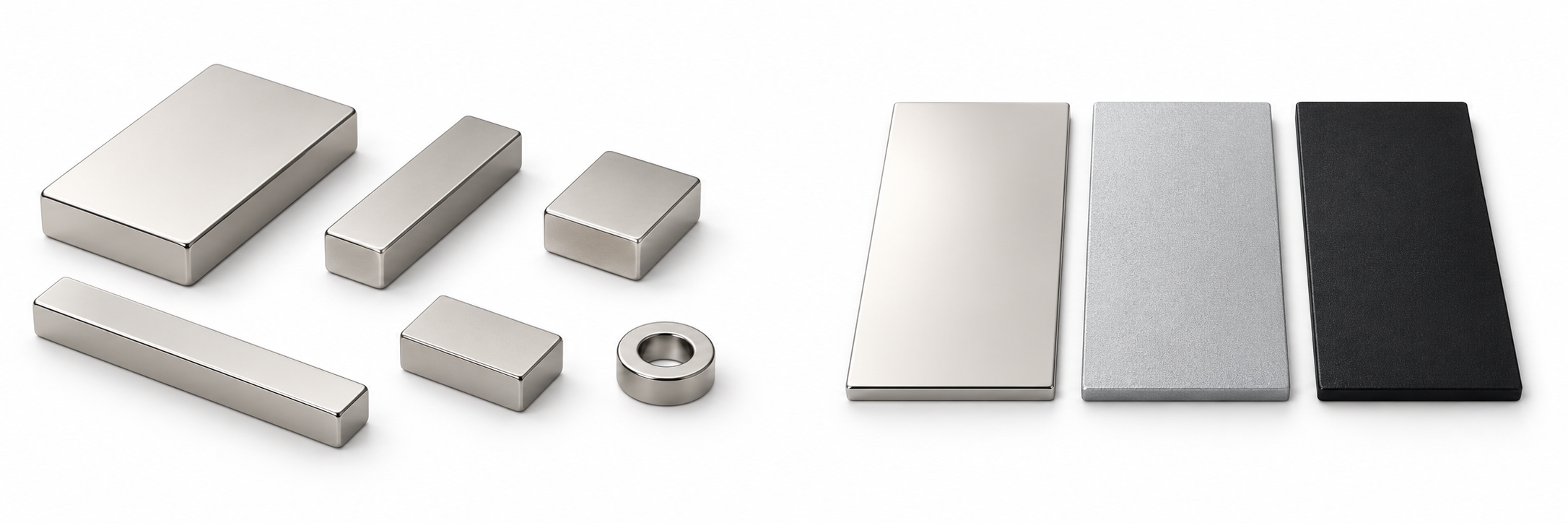
Use published grades and curves to compare candidates, then confirm the part-specific conditions with engineering.
Send the geometry and working conditions for a cost-effective grade recommendation.
Engineering review · material selection · quotation
Request a Quote Technical ReviewConfidential RFQ · NDA available upon request