
Inspection Plan Agreement
Specify critical characteristics, sampling and acceptance criteria so the requested records match your part and application.
Plan the quality reviewHard ferrite (ceramic) magnets deliver reliable performance at the lowest cost per unit of magnetic energy. Excellent corrosion resistance, high electrical resistance, and stable to 250°C. Ideal for volume production.
Product forms, uses and selection considerations. Final specifications are agreed for each project.
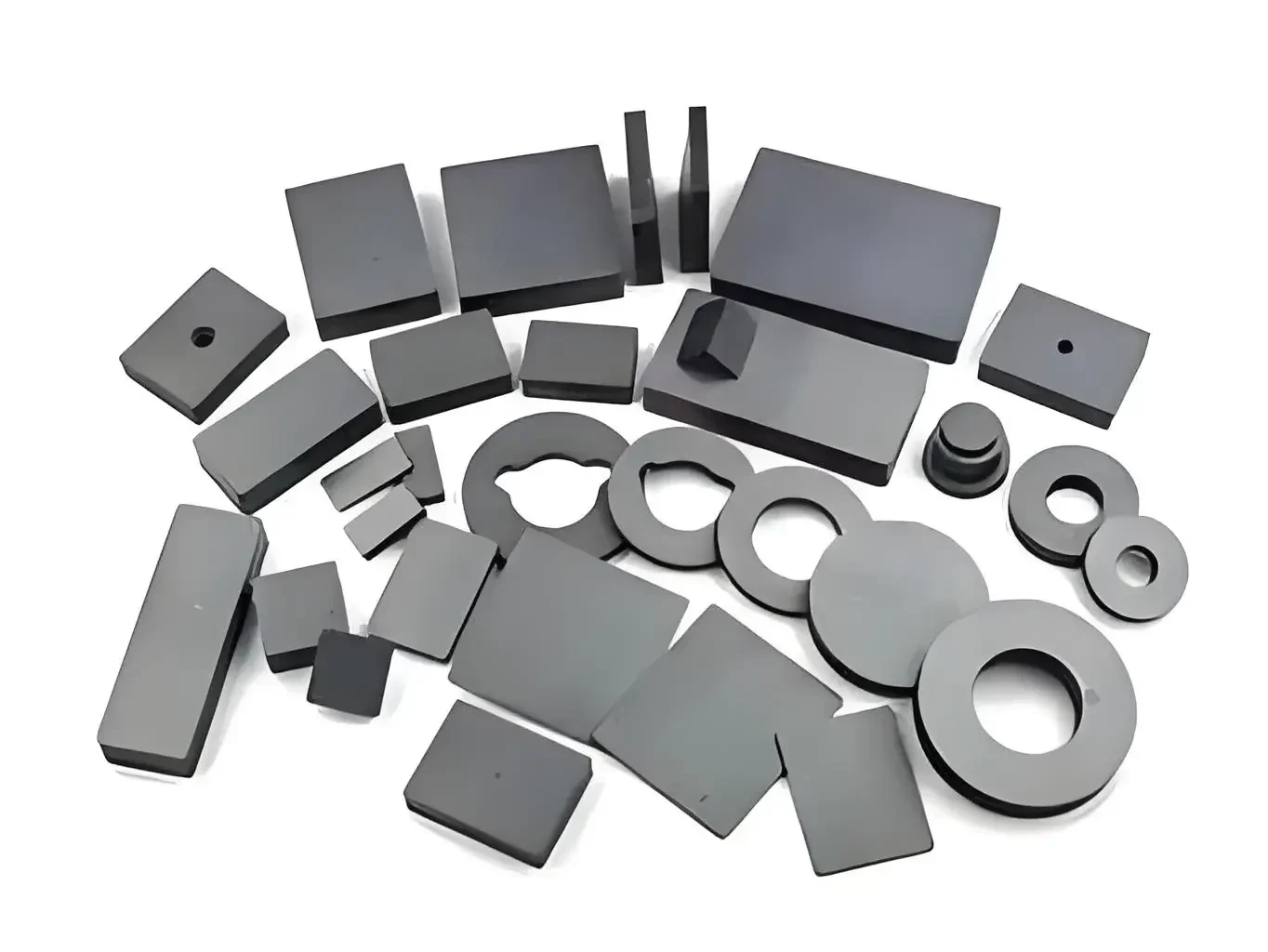
Shaped parts for cost-sensitive magnetic designs.
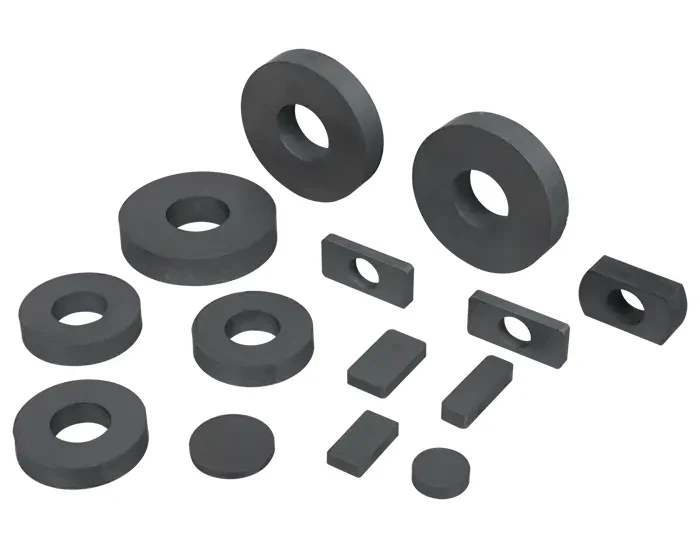
Common forms for appliance and sensing applications.
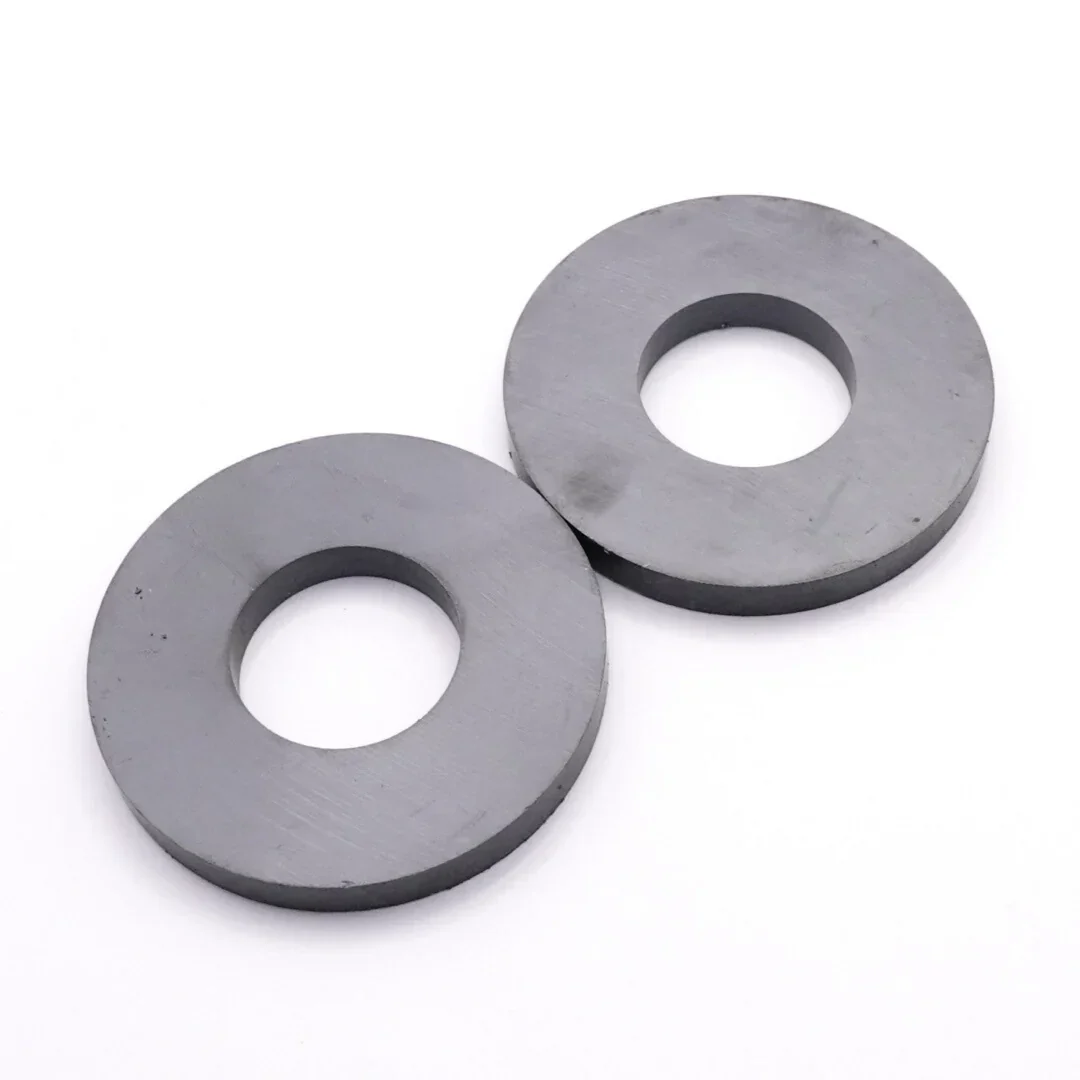
Ring forms for speakers and annular assemblies.
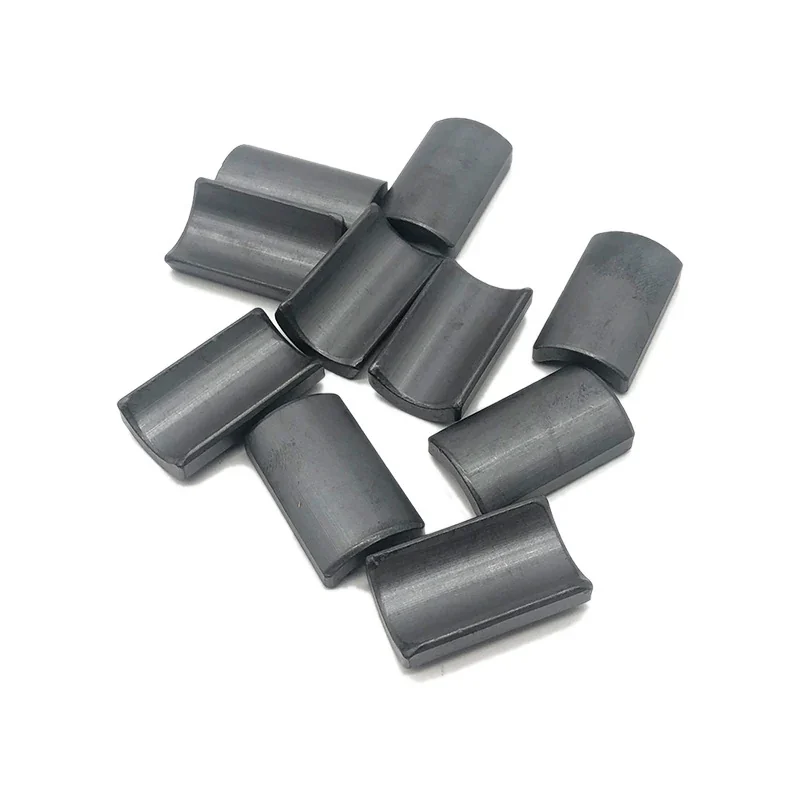
Curved segments for permanent-magnet motor designs.
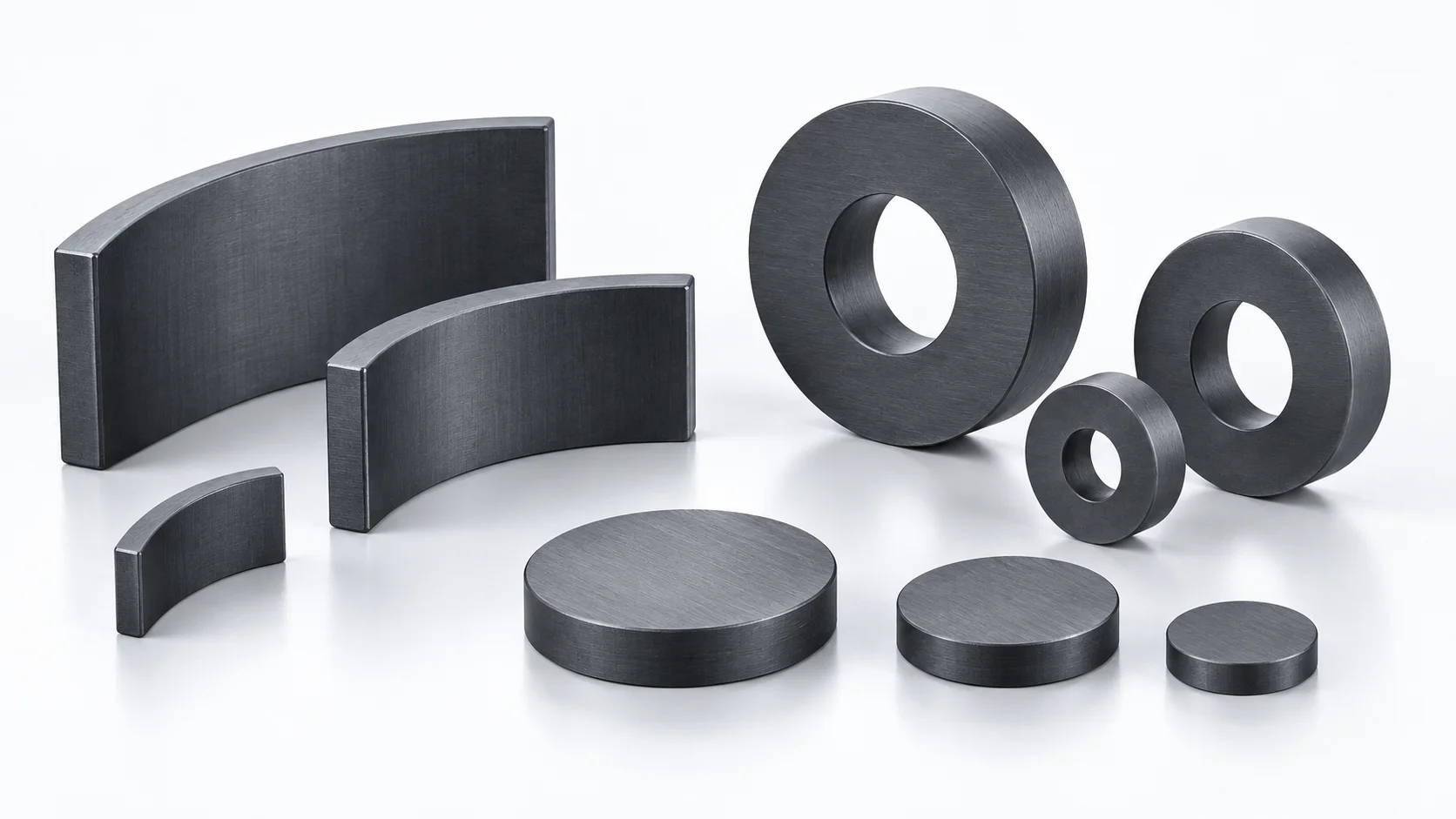
Motor arcs, speaker rings and holding discs place different demands on geometry and magnetization. Confirm the working gap and available volume alongside the magnetic grade.
State isotropic or anisotropic material, pole direction and ground surfaces on the drawing. Use the Y, C and HF references without assuming direct grade equivalence.
Compare ferrite grade references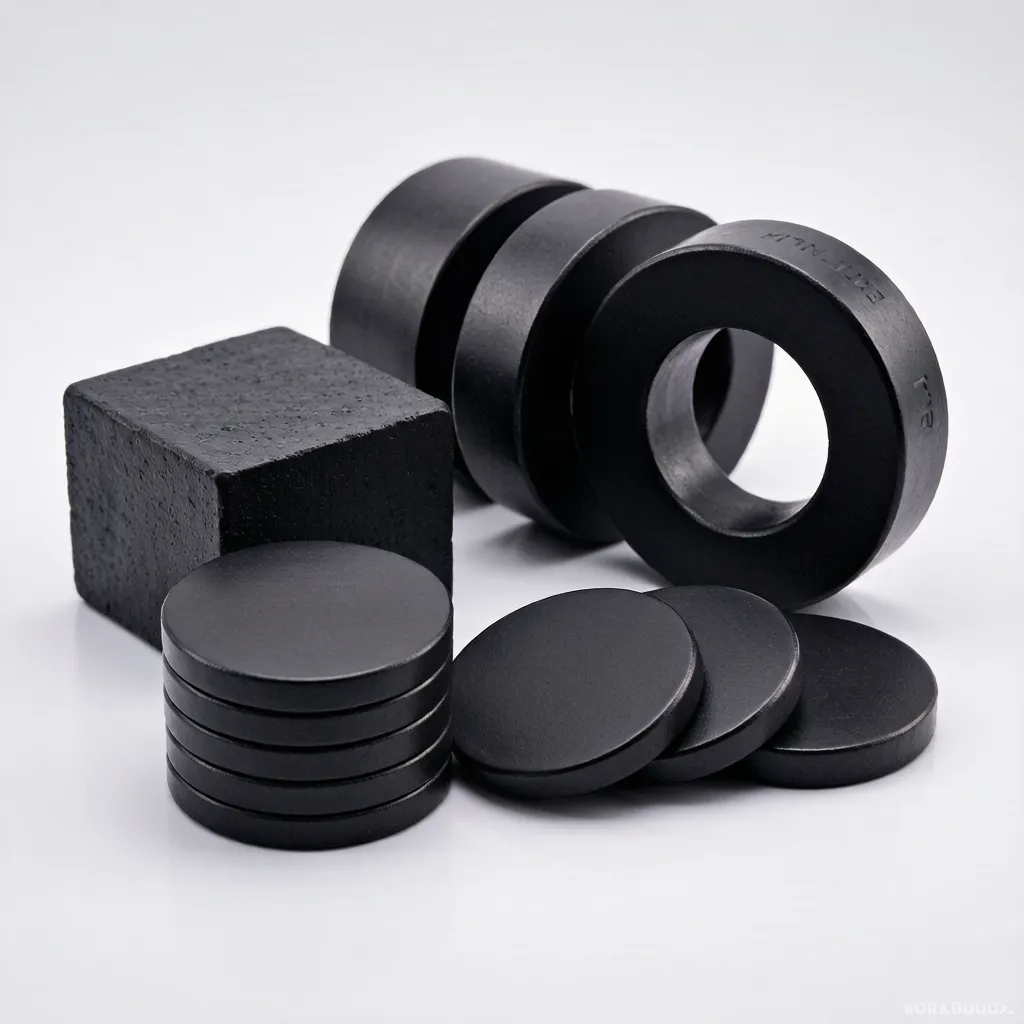
Review shape, working gap and magnetic requirements alongside the available ferrite grades.
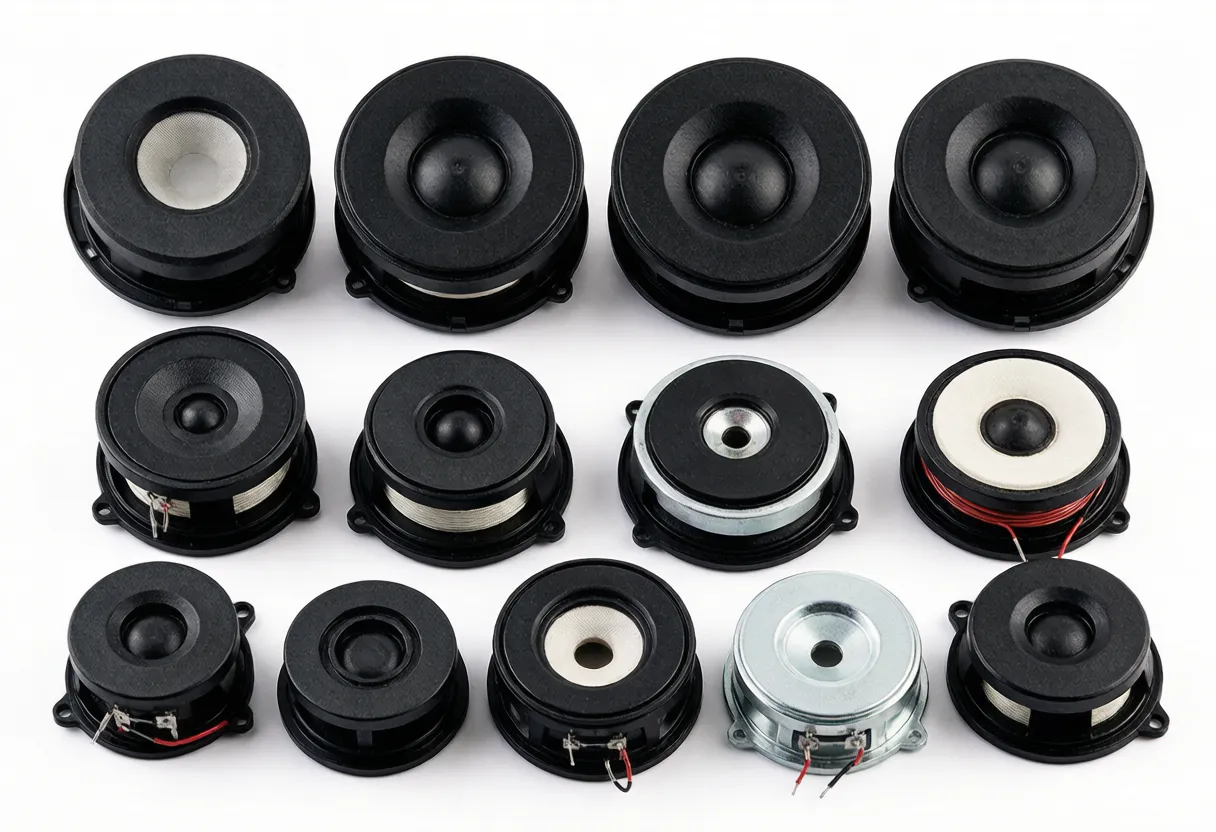 SELECTION GUIDEApplication selection notesExplore applications and requirements
Ferrite is often a cost-effective choice when the available space permits a lower energy density.
Br values in parentheses are converted from the published mT values (1 kGs = 100 mT). Reference data supports initial selection; the approved material specification governs supply.
| Application | Typical Spec | Why This Material |
|---|---|---|
| DC Motors | Y30 / Y30BH | Cost-efficient torque for appliances, automotive |
| Loudspeakers | Y25 / Y30 | Stable field, low cost, excellent for audio |
| Magnetic Separators | Y40 anisotropic | High gradient in large-volume separators |
| Automotive Sensors | Y30BH | Temperature-stable sensing from -40°C to 180°C |
| Crafts & Signage | Y10T isotropic | Cheapest magnet by volume — ideal for consumer products |
The manufacturing method determines magnetic orientation and performance:
Ferrite behaves differently from rare-earth magnets:
Compare published Y, C and HF grade references. The naming systems do not imply one-to-one equivalence; final substitution requires engineering approval.
Scroll to view more columns.
| Grade | Br mT (kGs) | Hcb kA/m (kOe) | Hcj kA/m (kOe) | (BH)max kJ/m³ (MGOe) |
|---|---|---|---|---|
| Y8T | 200-235 (2.0-2.35) | 125-160 (1.57-2.01) | 210-280 (2.64-3.52) | 6.5-9.5 (0.8-1.2) |
| Y10T | 200-235 (2.0-2.35) | 128-160 (1.61-2.01) | 210-280 (2.64-3.52) | 6.4-9.6 (0.8-1.2) |
| Y20 | 320-380 (3.2-3.8) | 135-190 (1.70-2.39) | 140-195 (1.76-2.45) | 18.0-22.0 (2.3-2.8) |
| Y22H | 310-360 (3.1-3.6) | 220-250 (2.76-3.14) | 280-320 (3.52-4.02) | 20.0-24.0 (2.5-3.0) |
| Y23 | 320-370 (3.2-3.7) | 170-190 (2.14-2.39) | 190-230 (2.39-2.89) | 20.0-25.5 (2.5-3.2) |
| Y25 | 360-400 (3.6-4.0) | 135-170 (1.70-2.14) | 140-200 (1.76-2.51) | 22.5-28.0 (2.8-3.5) |
| Y26H | 360-390 (3.6-3.9) | 220-250 (2.76-3.14) | 225-255 (2.83-3.20) | 23.0-28.0 (2.9-3.5) |
| Y26H-1 | 360-390 (3.6-3.9) | 200-250 (2.51-3.14) | 225-255 (2.83-3.20) | 23.0-28.0 (2.9-3.5) |
| Y26H-2 | 360-380 (3.6-3.8) | 263-288 (3.30-3.62) | 318-350 (4.00-4.40) | 24.0-28.0 (3.0-3.5) |
| Y27H | 370-400 (3.7-4.0) | 205-250 (2.58-3.14) | 210-255 (2.64-3.20) | 25.0-29.0 (3.1-3.6) |
| Y28 | 370-400 (3.7-4.0) | 175-210 (2.20-2.64) | 180-220 (2.26-2.76) | 26.0-30.0 (3.3-3.8) |
| Y28H-1 | 380-400 (3.8-4.0) | 240-260 (3.02-3.27) | 250-280 (3.14-3.52) | 27.0-30.0 (3.4-3.8) |
| Y28H-2 | 360-380 (3.6-3.8) | 271-295 (3.41-3.71) | 382-405 (4.80-5.09) | 26.0-30.0 (3.3-3.8) |
| Y30 | 370-400 (3.7-4.0) | 175-210 (2.20-2.64) | 180-220 (2.26-2.76) | 26.0-30.0 (3.3-3.8) |
| Y30BH | 380-390 (3.8-3.9) | 223-235 (2.80-2.95) | 231-245 (2.90-3.08) | 27.0-30.0 (3.4-3.8) |
| Y30H-1 | 380-400 (3.8-4.0) | 230-275 (2.89-3.46) | 235-290 (2.95-3.64) | 27.0-32.0 (3.4-4.0) |
| Y30H-2 | 395-415 (3.95-4.15) | 275-300 (3.46-3.77) | 310-335 (3.90-4.21) | 27.0-32.5 (3.4-4.1) |
| Y32 | 400-420 (4.0-4.2) | 160-190 (2.01-2.39) | 165-195 (2.07-2.45) | 30.0-33.5 (3.8-4.2) |
| Y32H-1 | 400-420 (4.0-4.2) | 190-230 (2.39-2.89) | 230-250 (2.89-3.14) | 31.5-35.0 (4.0-4.4) |
| Y32H-2 | 400-440 (4.0-4.4) | 224-240 (2.81-3.02) | 230-250 (2.89-3.14) | 31.0-34.0 (3.9-4.3) |
| Y33 | 410-430 (4.1-4.3) | 220-250 (2.76-3.14) | 225-255 (2.83-3.20) | 31.5-35.0 (4.0-4.4) |
| Y33H | 410-430 (4.1-4.3) | 250-270 (3.14-3.39) | 250-275 (3.14-3.46) | 31.5-35.0 (4.0-4.4) |
| Y34 | 420-440 (4.2-4.4) | 200-230 (2.51-2.89) | 205-235 (2.58-2.95) | 32.5-36.0 (4.1-4.5) |
| Y35 | 430-450 (4.3-4.5) | 215-239 (2.70-3.00) | 217-241 (2.73-3.03) | 33.1-38.2 (4.2-4.8) |
| Y36 | 430-450 (4.3-4.5) | 247-271 (3.10-3.41) | 250-274 (3.14-3.44) | 35.1-38.3 (4.4-4.8) |
| Y38 | 440-460 (4.4-4.6) | 285-305 (3.58-3.83) | 294-310 (3.69-3.90) | 36.6-40.6 (4.6-5.1) |
| Y40 | 440-460 (4.4-4.6) | 330-354 (4.15-4.45) | 340-360 (4.27-4.52) | 37.5-41.8 (4.7-5.3) |
| Grade | Br mT (kGs) | Hcb kA/m (kOe) | Hcj kA/m (kOe) | (BH)max kJ/m³ (MGOe) |
|---|---|---|---|---|
| C1 | 230 (2.300) | 148 (1.86) | 258 (3.50) | 8.36 (1.05) |
| C5 | 380 (3.80) | 191 (2.40) | 199 (2.50) | 27.0 (3.40) |
| C7 | 340 (3.40) | 258 (3.23) | 318 (4.00) | 21.9 (2.75) |
| C8 / C8A | 385 (3.85) | 235 (2.95) | 242 (3.05) | 27.8 (3.50) |
| C8B | 420 (4.20) | 232 (2.91) | 236 (2.96) | 32.8 (4.12) |
| C9 | 380 (3.80) | 280 (3.52) | 320 (4.01) | 26.4 (3.32) |
| C10 | 400 (4.00) | 280 (3.52) | 284 (3.57) | 30.04 (3.82) |
| Grade | Br mT (kGs) | Hcb kA/m (kOe) | Hcj kA/m (kOe) | (BH)max kJ/m³ (MGOe) |
|---|---|---|---|---|
| HF8/22 | 200/220 (2.00/2.20) | 125/140 (1.57/1.76) | 220/230 (2.76/2.89) | 6.5/6.8 (0.8/1.1) |
| HF20/19 | 320/333 (3.20/3.33) | 170/190 (2.14/2.39) | 190/200 (2.39/2.51) | 20.0/21.0 (2.5/2.7) |
| HF20/28 | 310/325 (3.10/3.25) | 220/230 (2.76/2.89) | 280/290 (3.52/3.64) | 20.0/21.0 (2.5/2.7) |
| HF22/30 | 350/365 (3.50/3.65) | 255/265 (3.20/3.33) | 290/300 (3.64/3.77) | 22.0/23.5 (2.8/3.0) |
| HF24/16 | 350/365 (3.50/3.65) | 155/175 (1.95/2.20) | 160/180 (2.01/2.26) | 24.0/25.5 (3.0/3.2) |
| HF24/23 | 350/365 (3.50/3.65) | 220/230 (2.76/2.89) | 230/240 (2.89/3.01) | 24.0/25.5 (3.0/3.2) |
| HF24/35 | 360/370 (3.60/3.70) | 260/270 (3.27/3.39) | 350/360 (4.40/4.52) | 24.0/25.5 (3.0/3.2) |
| HF26/16 | 370/380 (3.70/3.80) | 155/175 (1.95/2.20) | 160/180 (2.01/2.26) | 26.0/27.0 (3.2/3.4) |
| HF26/18 | 370/380 (3.70/3.80) | 175/185 (2.20/2.33) | 180/190 (2.26/2.39) | 26.0/27.0 (3.3/3.4) |
| HF26/24 | 370/380 (3.70/3.80) | 230/240 (2.89/3.01) | 240/250 (3.01/3.14) | 26.0/27.0 (3.3/3.4) |
| HF26/26 | 370/380 (3.70/3.80) | 230/240 (2.89/3.01) | 260/270 (3.27/3.39) | 26.0/27.0 (3.3/3.4) |
| HF26/30 | 385/395 (3.85/3.95) | 260/270 (3.27/3.39) | 300/310 (3.77/3.89) | 26.0/27.0 (3.3/3.4) |
| HF28/26 | 385/395 (3.85/3.95) | 250/265 (3.14/3.33) | 260/275 (3.27/3.45) | 28.0/30.0 (3.5/3.8) |
| HF28/28 | 385/395 (3.85/3.95) | 260/270 (3.27/3.39) | 280/290 (3.50/3.60) | 28.0/30.0 (3.5/3.8) |
| HF30/26 | 395/405 (3.95/4.05) | 250/260 (3.14/3.33) | 260/270 (3.27/3.39) | 30.0/31.5 (3.8/3.9) |
| HF32/17 | 410/420 (4.10/4.20) | 160/170 (2.01/2.14) | 165/175 (2.07/2.20) | 32.0/33.0 (4.0/4.1) |
| HF32/22 | 410/420 (4.10/4.20) | 215/225 (2.70/2.83) | 220/230 (2.76/2.89) | 32.0/33.0 (4.0/4.1) |
| HF32/25 | 410/420 (4.10/4.20) | 240/250 (3.01/3.14) | 250/260 (3.14/3.27) | 32.0/33.0 (4.0/4.1) |
Use this single reference for grade properties, application notes and available datasheets. Confirm the selected specification with engineering before ordering.
| Grade | Type | Temp. reference* | Typical application |
|---|---|---|---|
| Y10T | Isotropic | 250°C | Toys, crafts, general |
| Y25 | Anisotropic | 250°C | Speakers, holding |
| Y30 | Anisotropic | 250°C | Motors, separators |
| Y30BH | Anisotropic | 250°C | High-resistance motors |
| Y40 | Anisotropic | 250°C | Premium performance |
*Temperature values are selection references, not part-specific limits. Confirm the grade, magnetic circuit and test conditions before specifying.
| Characteristic | Symbol | Unit | Value |
|---|---|---|---|
| Density | D | g/cc | 4.9 – 5.1 |
| Vickers Hardness | Hv | D.P.N | 400 – 700 |
| Compression Strength | C.S. | N/mm² | 680 – 720 |
| Coefficient of Thermal Expansion (∥) | C∥ | 10⁻⁶/°C | 15 |
| Coefficient of Thermal Expansion (⊥) | C⊥ | 10⁻⁶/°C | 10 |
| Specific Heat Capacity | c | J/kg·°C | 795 – 855 |
| Electrical Resistivity | ρ | μΩ·cm | 1 × 10¹⁰ |
| Thermal Conductivity | k | W/cm·°C | 0.029 |
| Tensile Strength | σUTS | Pa | 34 × 10⁶ |
| Flexural Strength | σ | Pa | 62 × 10⁶ |
| Hardness (Mohs) | — | Mohs | 7 |
| Poisson's Ratio | ν | — | 0.28 |
| Curie Temperature | Tc | °C | 450 |
| Rev. Temp. Coeff. of Induction (Br) | α | %/°C | −0.2 |
| Rev. Temp. Coeff. of Intrinsic Coercivity (Hci) | β | %/°C | +0.27 |
Understand when ferrite's stability, corrosion resistance and cost outweigh the higher energy density of rare-earth magnets.
Compare magnet materialsChoose ferrite when: size is not constrained, cost is the primary driver, you need corrosion resistance without coating, or the application operates at temperatures above 200°C without needing high energy density. Typical examples: appliance motors, speakers, magnetic separators, automotive sensors. Choose NdFeB when: size and weight matter, or you need high flux from a small volume.
Only by grinding. Ferrite is a hard ceramic — you cannot drill, tap, or mill it economically. Design net-shape and specify ground faces only where needed for tolerance.
Ferrite remanence generally increases as temperature falls, while coercivity decreases. That combination can increase cold-temperature demagnetization risk. Review the grade curves, operating point and opposing field at the coldest condition, and agree a validation test for the assembly.
Barium ferrite (BaO·6Fe₂O₃) is older and slightly less powerful; strontium ferrite (SrO·6Fe₂O₃) is the modern standard with better magnetic properties. All our Y-series grades are strontium ferrite.
Dry-pressed sintered ferrite in the standard motor and speaker formats, plus custom pressed shapes:
Ferrite is a hard, brittle ceramic — most parts ship as-sintered; diamond grinding only where required:
| Process | Typical Tolerance | Notes |
|---|---|---|
| As-sintered | ±1–2% of dimension | Most economical; standard for motor poles |
| Diamond ground | ±0.05 mm | Critical faces and speaker gaps |
| Lapped | ±0.02 mm | Gap faces on request |
| Chamfers | Per drawing | Recommended to prevent edge chipping |
What ships with your parts — scoped per project during quotation.
Certificate of Analysis with measured Br / Hcb / Hcj / (BH)max against the specified grade of your ferrite parts, from our demagnetization-curve test equipment.
Dimensional reports by gauge or CMM as agreed in the inspection plan; critical dimensions identified together during DFM review.
RoHS / REACH declarations on request, and FAI / PPAP documentation per project requirements.
Specify critical characteristics, sampling and acceptance criteria so the requested records match your part and application.
Plan the quality reviewProcess reference images are separated from the product gallery. They illustrate equipment and handling topics; they do not establish ownership of a facility, a customer delivery, or project-specific inspection results.
Ferrite production uses ceramic powder forming, long controlled sintering, grinding and high-volume release inspection for rings, blocks and motor arcs.
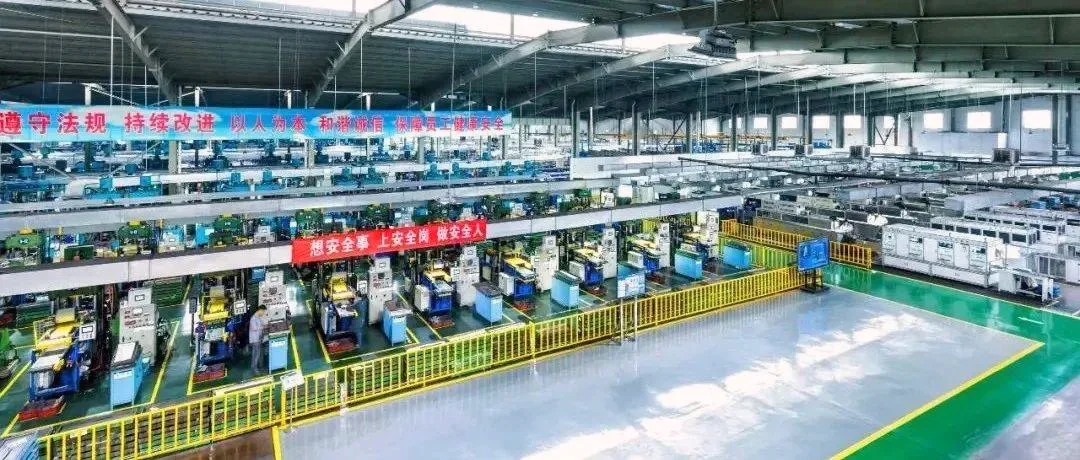
Linked production cells and material flow support high-volume ferrite manufacturing with tighter process control.
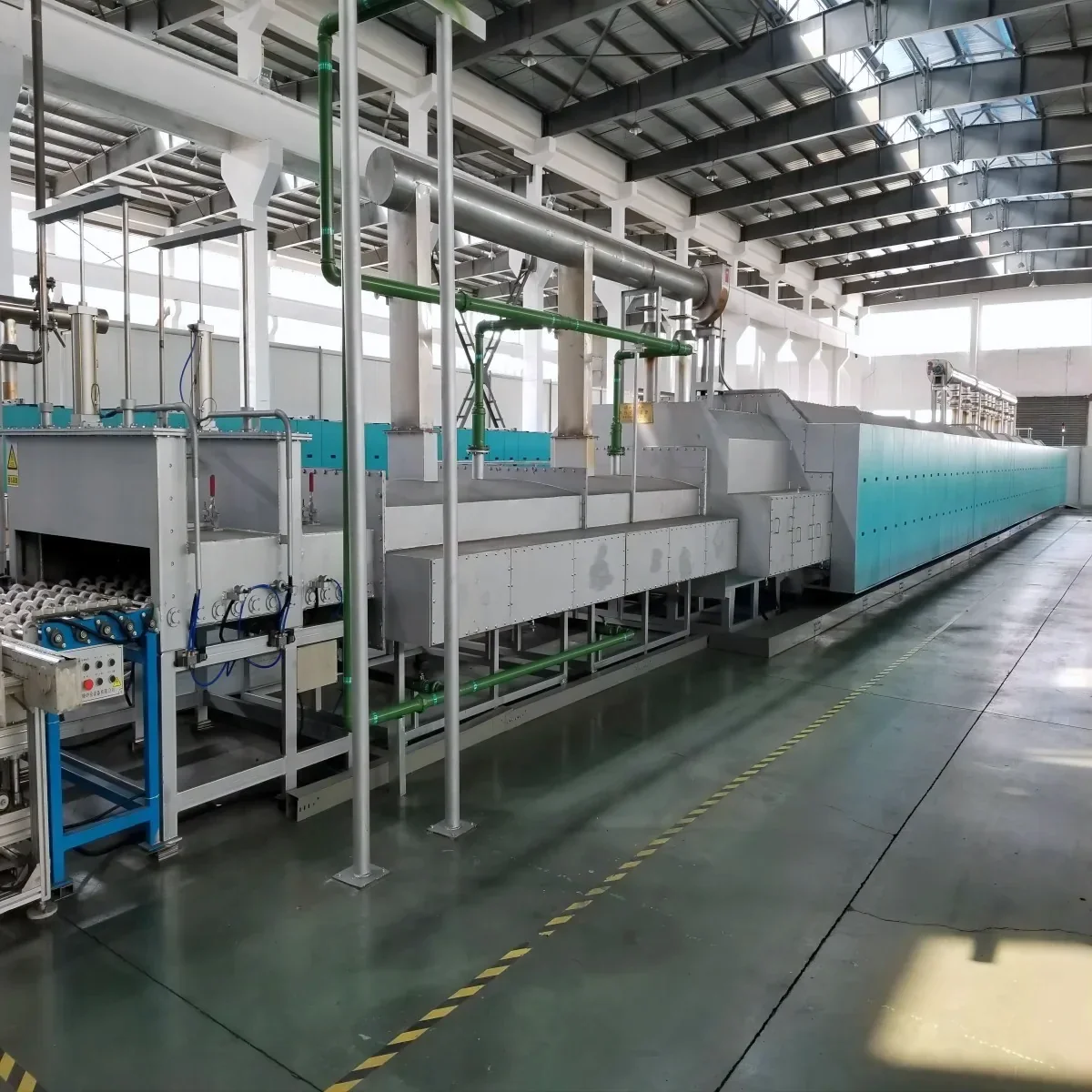
A long roller-hearth furnace controls heating, soak and cooling zones.
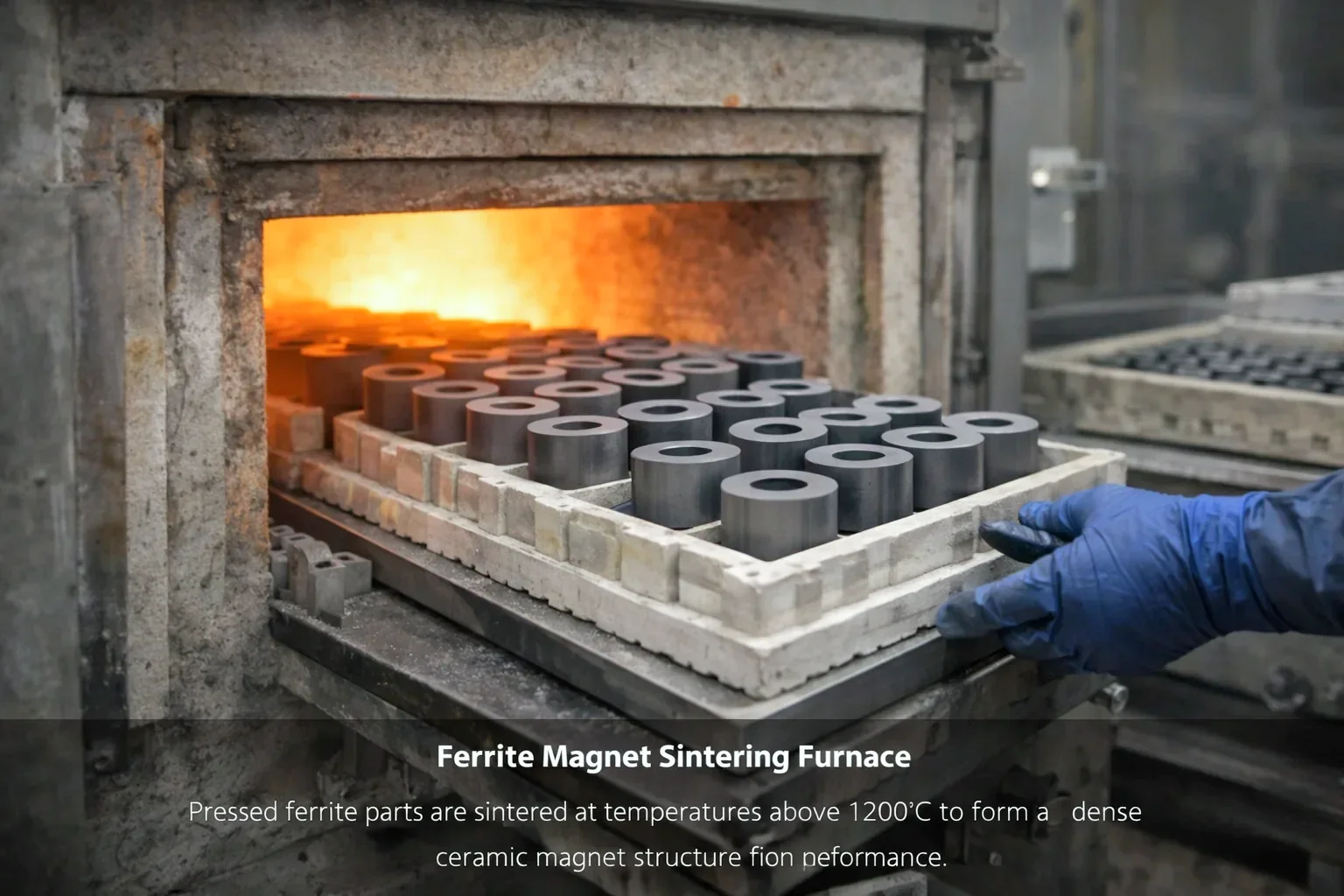
Pressed ceramic blanks are arranged for controlled high-temperature densification.
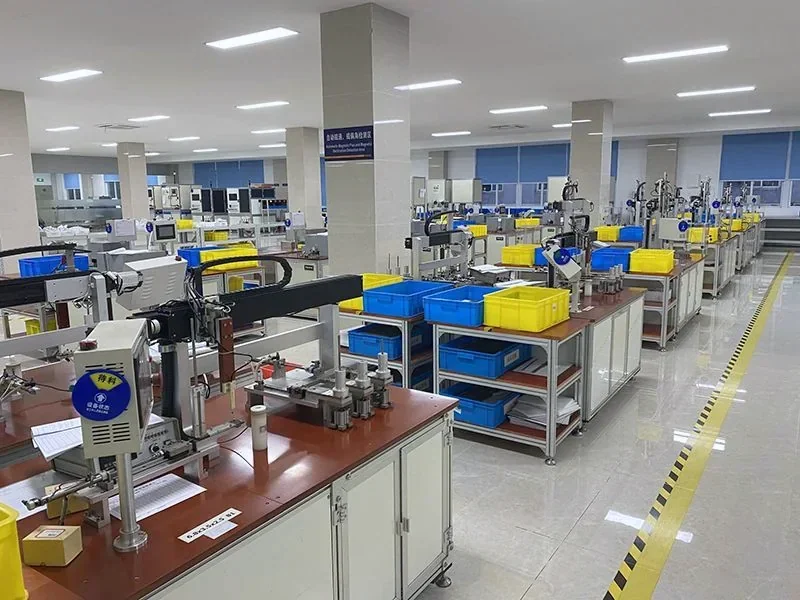
Automated stations reduce variation in appearance and dimensional release checks.
Send it to our team for engineering review and quotation — grade recommendation included.