Test medium and pressure
Identify the fluid or gas and the pressure applied to the tested part.
 Request a Quote
Sealing geometry
Casting and machining routes developed around sealing faces, fluid passages and pressure integrity — with acceptance criteria agreed before tooling release.
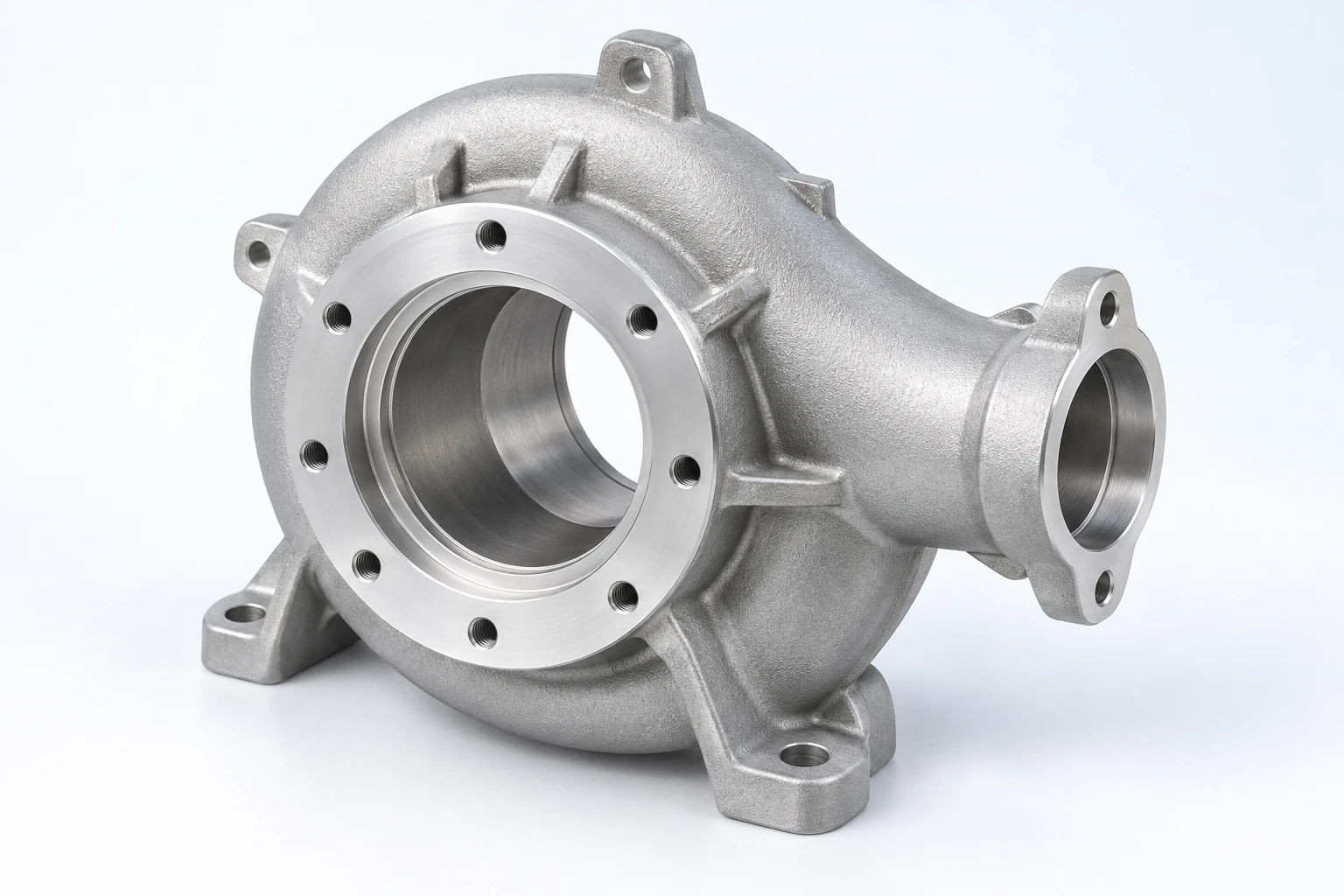
Define the supplied condition, critical dimensions and acceptance plan in the drawing review. Published process references depend on material, geometry and the agreed order scope.
Identify the fluid or gas and the pressure applied to the tested part.
Define stabilisation, test duration and allowable leakage with units.
Review machining exposure, sealing surfaces and any approved impregnation route.
Production route, manufacturing responsibility, available documentation and acceptance criteria are confirmed for the particular product and order.
130–4,400T aluminum HPDC network with vacuum assistance where required
Sealing faces, ports, bores and threaded connections
Air-decay, pressure-drop or other agreed methods
Lot-controlled inspection and nonconformance records
Feature review
The continuous groove, adjoining land and side port define different parts of the sealing interface. Identify the gasket contact, machined sealing surfaces and test connections on the same drawing revision.
Relate the test boundary to the supplied condition after machining and finishing. Acceptance needs the stated medium, pressure, duration and allowable leakage, together with any approved process sequence.
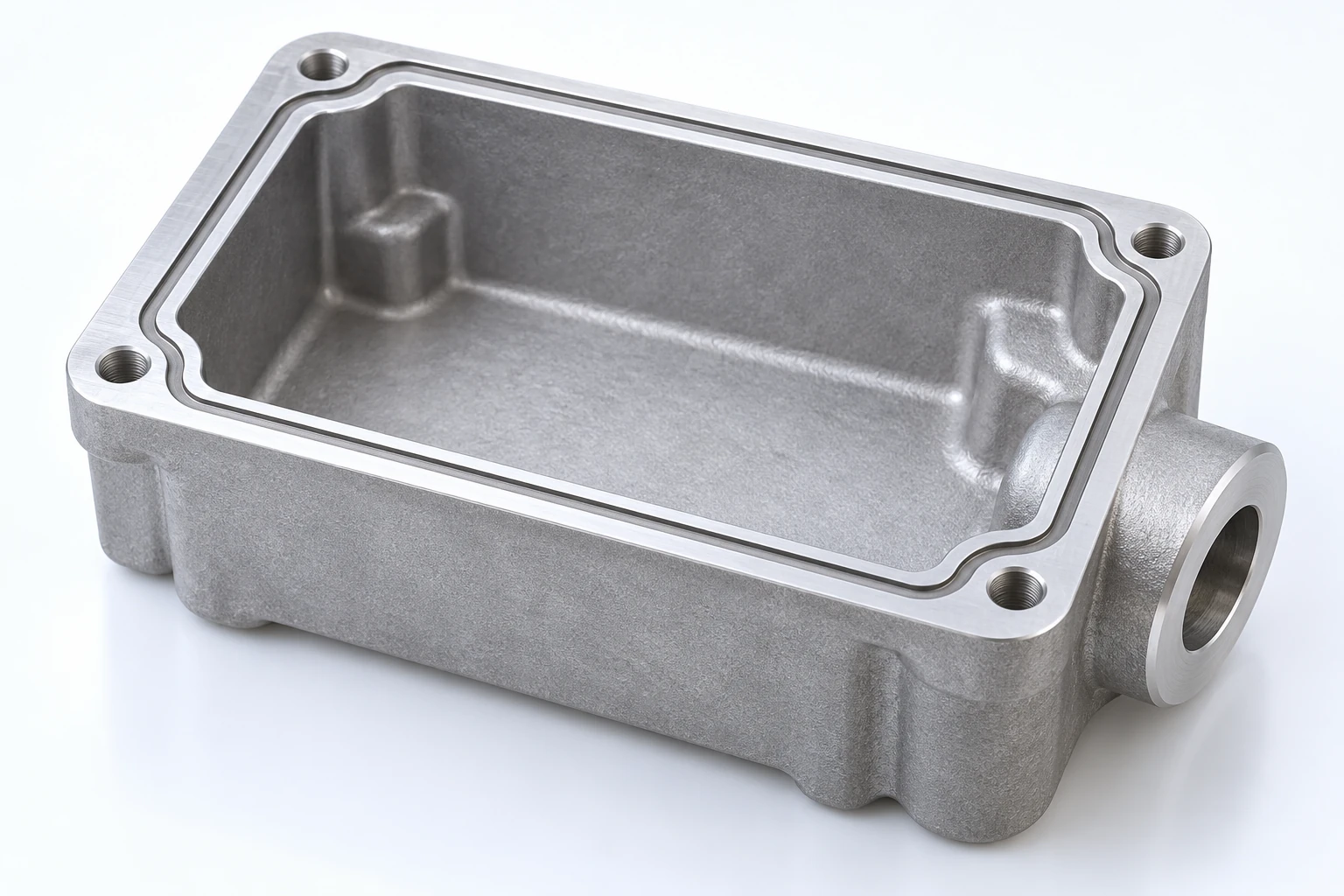
Review filling, wall transitions and machining exposure.
Control gasket lands, bores, ports and cleanliness.
Specify medium, pressure, timing and allowable leak rate.
Review together: media, pressure and acceptance limit; sealing faces, ports and wall sections; porosity review and agreed test method.
Multi-port housing with a recessed cover interface.
Manifold form with cavities and port interfaces.
Cylindrical housing with mounting and cover interfaces.
No casting process should be described that way. We manage porosity risk through DFM, process selection, machining allowance and an agreed leak-test acceptance plan.
Yes when the fixture, cycle time and acceptance criteria are defined. The test method and sampling level are included in the quotation.
Send the part drawing, functional interfaces, operating conditions and production requirements.
Send the model, volume and critical requirements for engineering review and a project-specific quotation.