Heat transfer
Review LED mounting faces, fins and the thermal path through the housing.
 Request a Quote
Lighting + thermal structure
Thermally efficient die-cast aluminum bodies for outdoor and industrial LED lighting, designed around cooling fins, sealing, mounting and durable surface finishes.
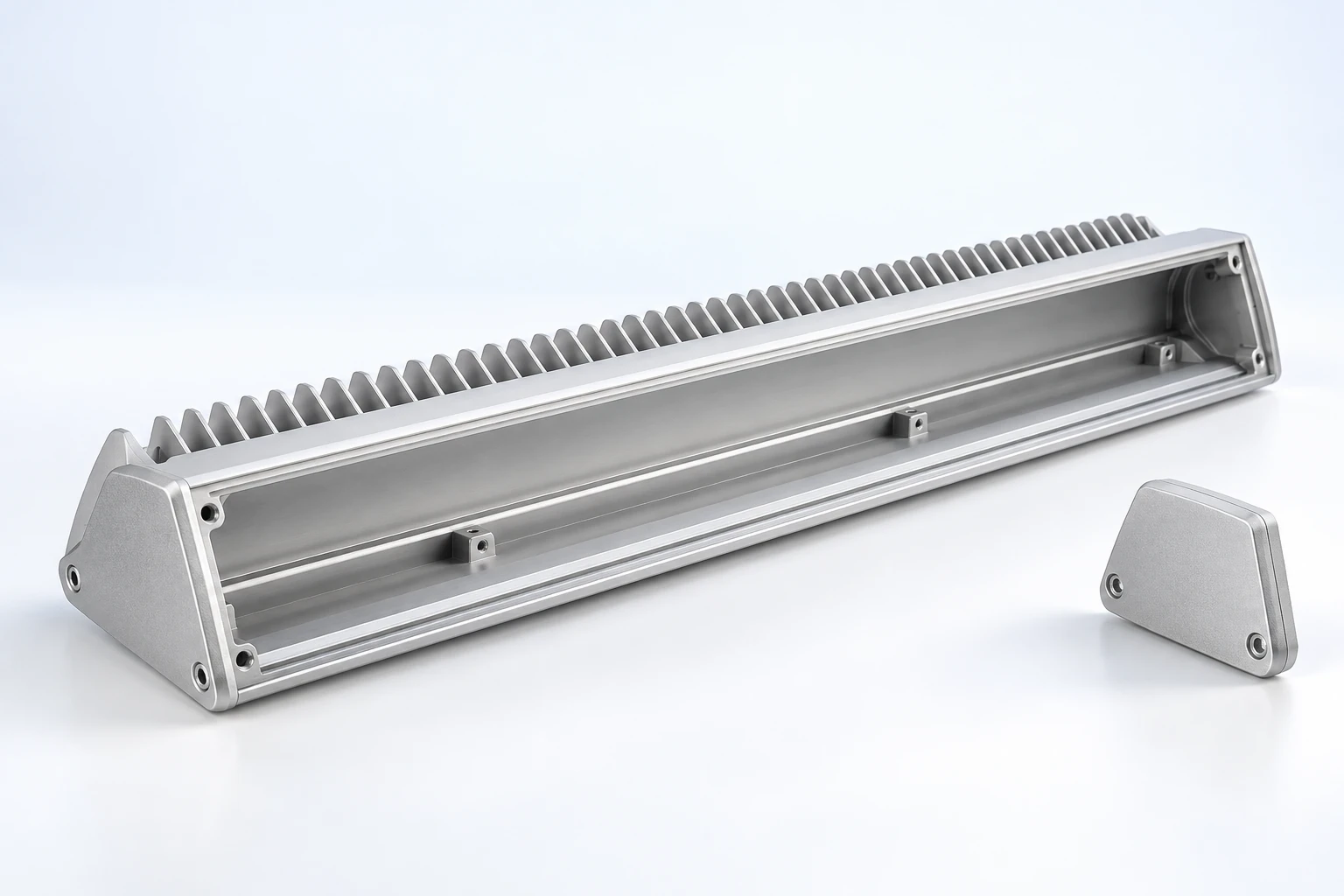
Define the supplied condition, critical dimensions and acceptance plan in the drawing review. Published process references depend on material, geometry and the agreed order scope.
Review LED mounting faces, fins and the thermal path through the housing.
Define seals, cable entries, brackets and corrosion-exposure conditions.
Approve visible faces, surface texture, color samples and coating coverage.
Production route, manufacturing responsibility, available documentation and acceptance criteria are confirmed for the particular product and order.
Feature review
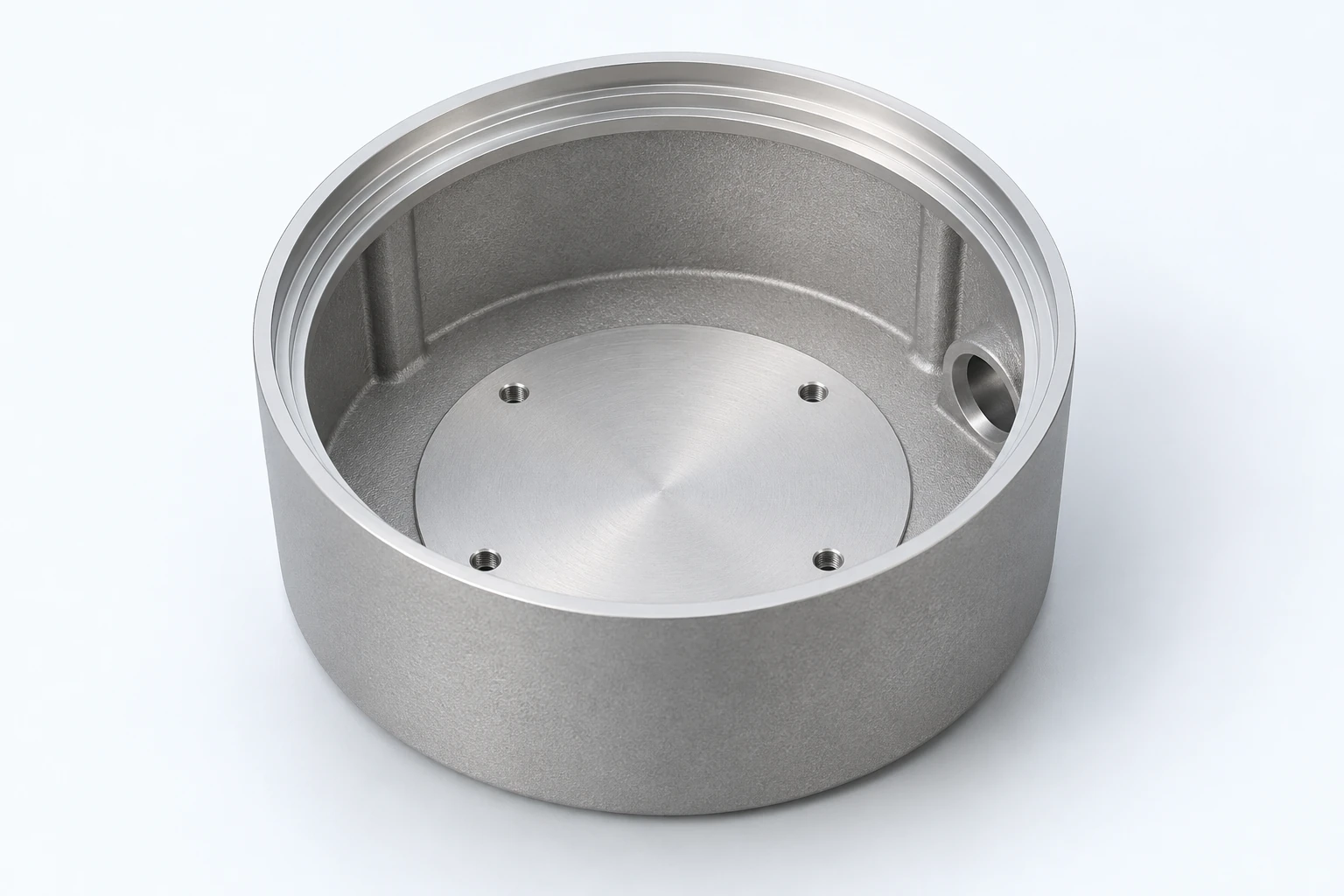
The circular housing shows an internal mounting pad, an open optical face and a cable entry. Relate the light-source fixing pattern to the thermal contact surface and the clearance required by the optical assembly.
Specify the closure seal and bracket loads separately from visible-finish requirements. This lets the housing review follow the luminaire from its internal mounting face to the outdoor interfaces.
130–4,400T aluminum HPDC network for varied luminaire envelopes
Gasket channels, cable entries and drainage review
Outdoor powder coat and conversion pretreatment
Threaded inserts, brackets and managed hardware
Identify mounting faces and the heat-transfer path.
Review fins, cover interfaces and cable entries.
Agree cosmetic samples, masking and sealing requirements.
Review together: fin layout and thermal contact faces; optical, mounting and sealing interfaces; surface finish and outdoor requirements.
Round radial-fin heat-sink form.
Rectangular luminaire-housing form with parallel fins.
Compact luminaire-housing form with rear fins.
ADC12 is widely used for castability and cost. A360 or another corrosion-focused alloy may be selected when environmental durability is the priority.
Yes within process limits. Fin height, spacing, thickness and draft are reviewed together to balance thermal area with reliable filling and die life.
Send the part drawing, functional interfaces, operating conditions and production requirements.
Send the model, volume and critical requirements for engineering review and a project-specific quotation.