
Inspection Plan Agreement
Specify critical characteristics, sampling and acceptance criteria so the requested records match your part and application.
Plan the quality reviewCast and sintered AlNiCo offers low reversible temperature drift for instruments, meters and sensors. Published 450°C+ material references require a grade-specific circuit and stability review; flux is not constant across the full temperature range.
Product forms, uses and selection considerations. Final specifications are agreed for each project.
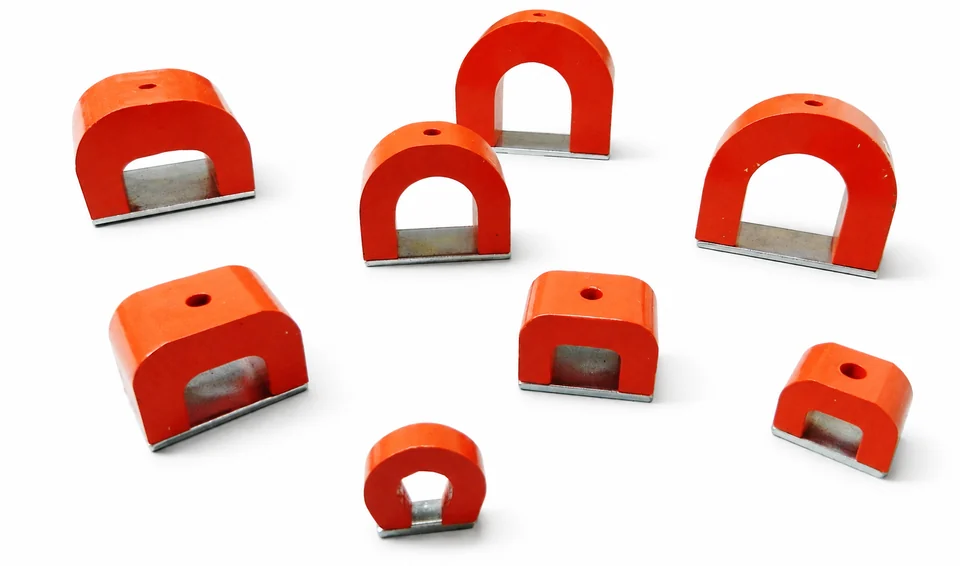
Open-gap geometries with circuit requirements confirmed.
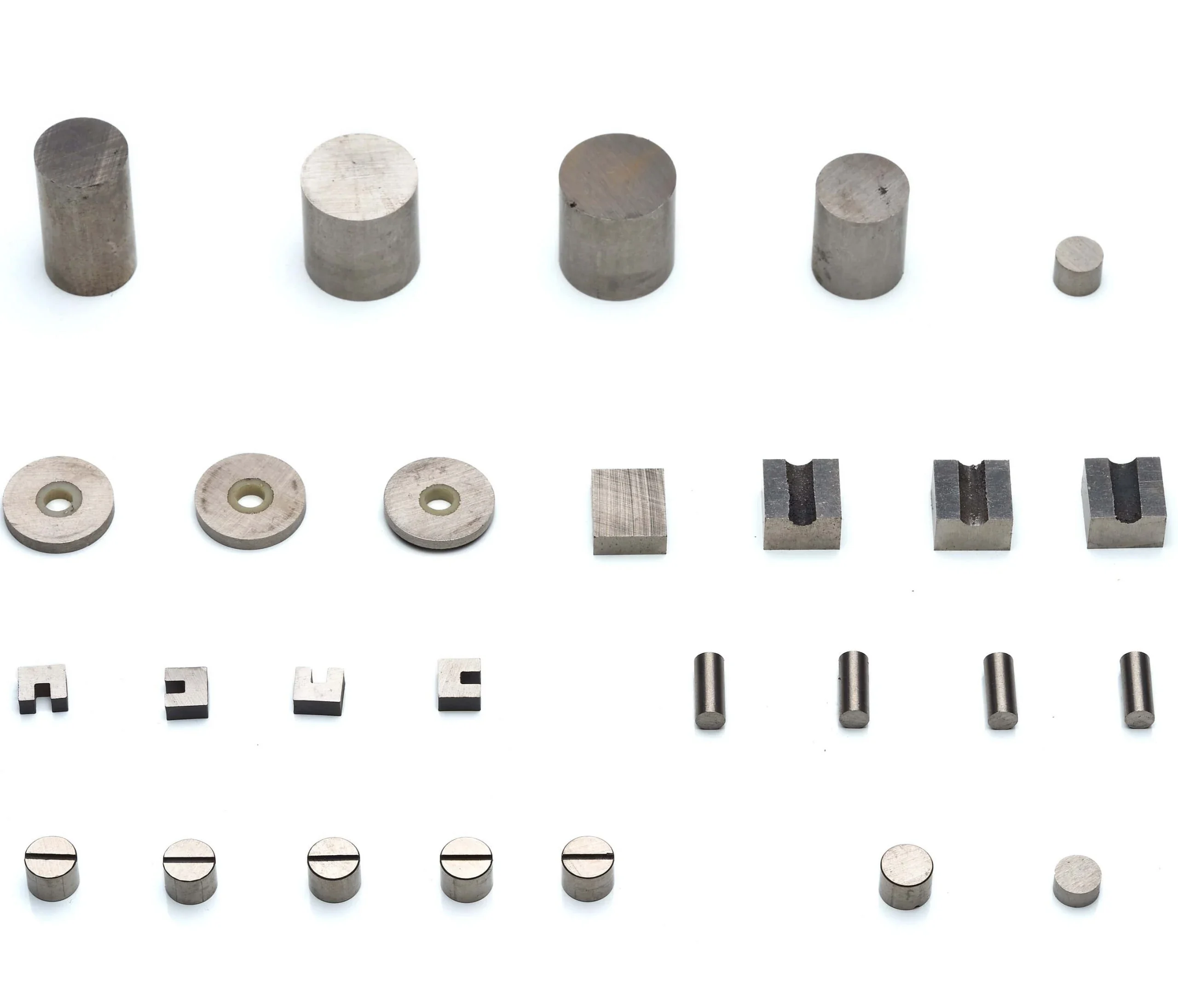
Cast forms for instruments and magnetic assemblies.
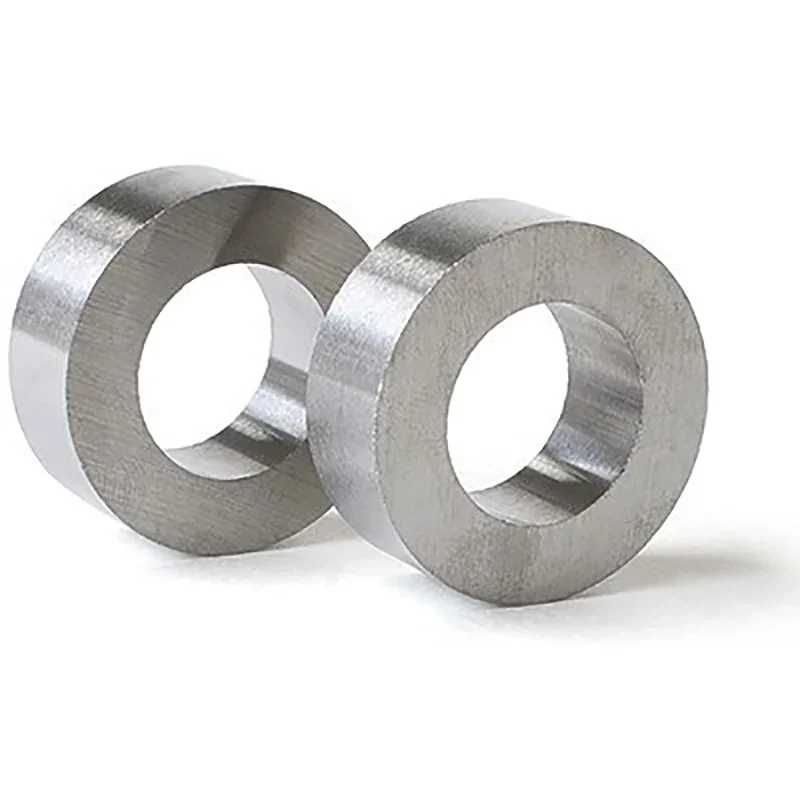
Annular parts with defined working-gap requirements.
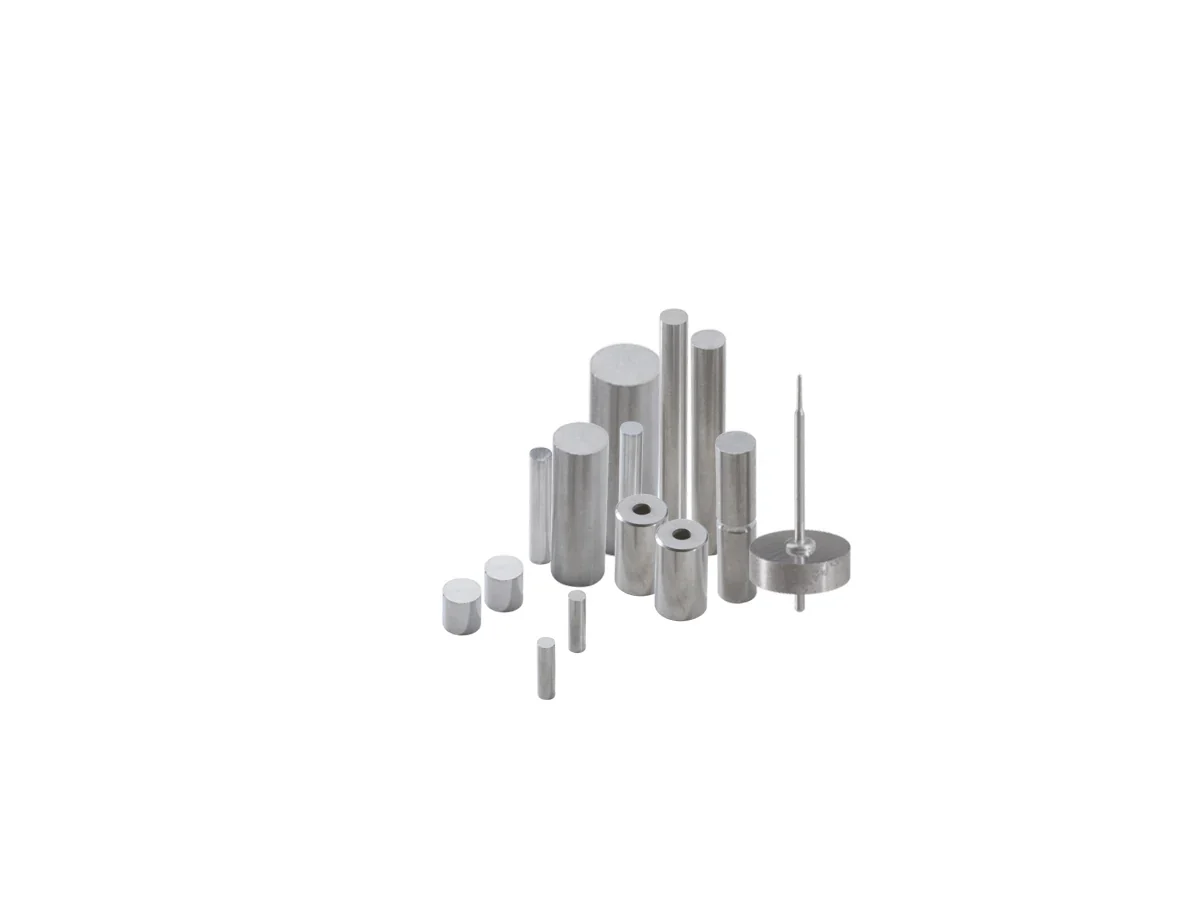
Cylindrical forms for pickups and instrument designs.
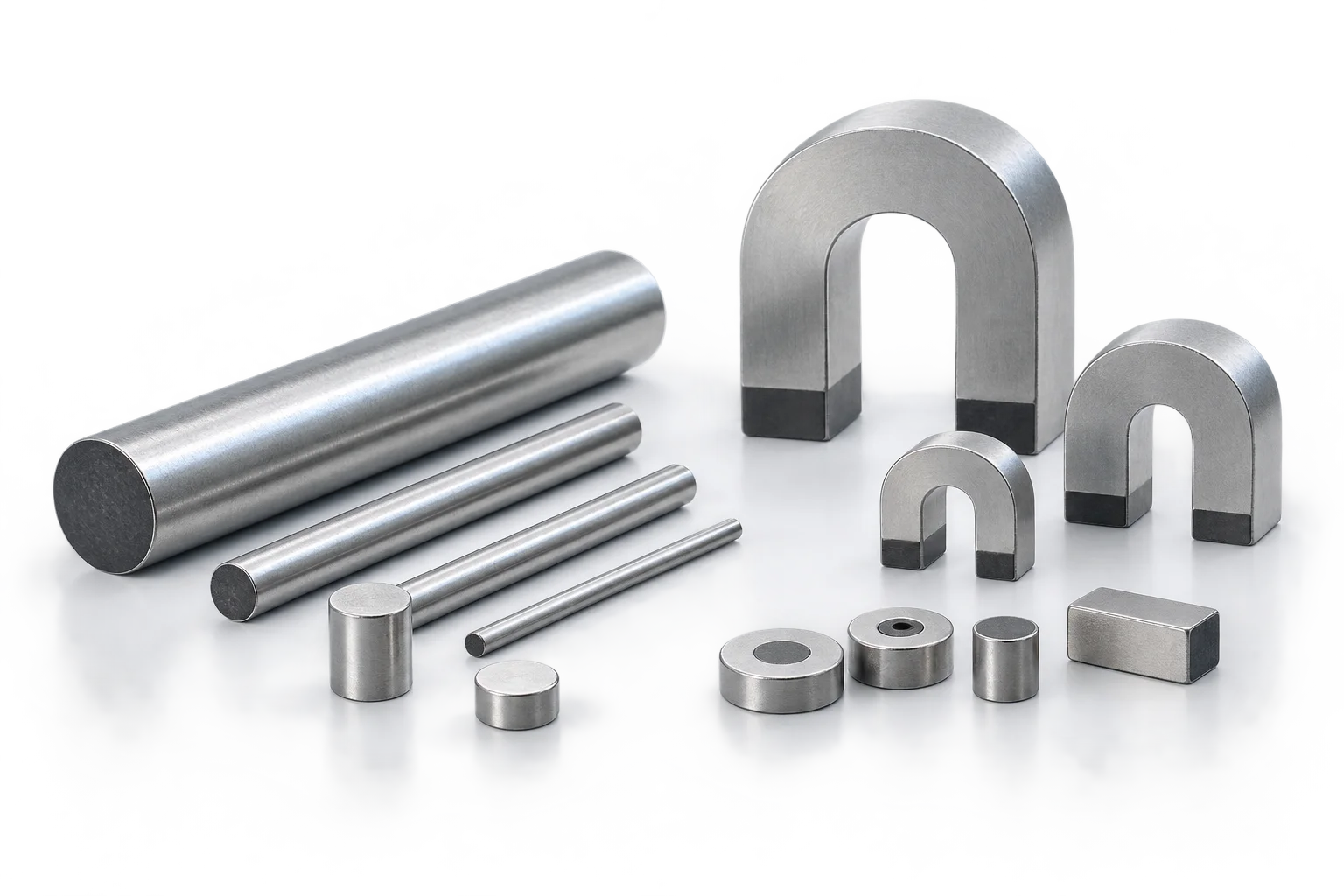
Rods, horseshoes and rings illustrate delivery forms, not interchangeable magnetic circuits. Choose cast or sintered AlNiCo with the required geometry and published properties.
Review the working point, open-circuit handling and opposing fields as well as temperature. Define magnetization and keeper requirements for the instrument or sensor assembly.
Review cast and sintered grades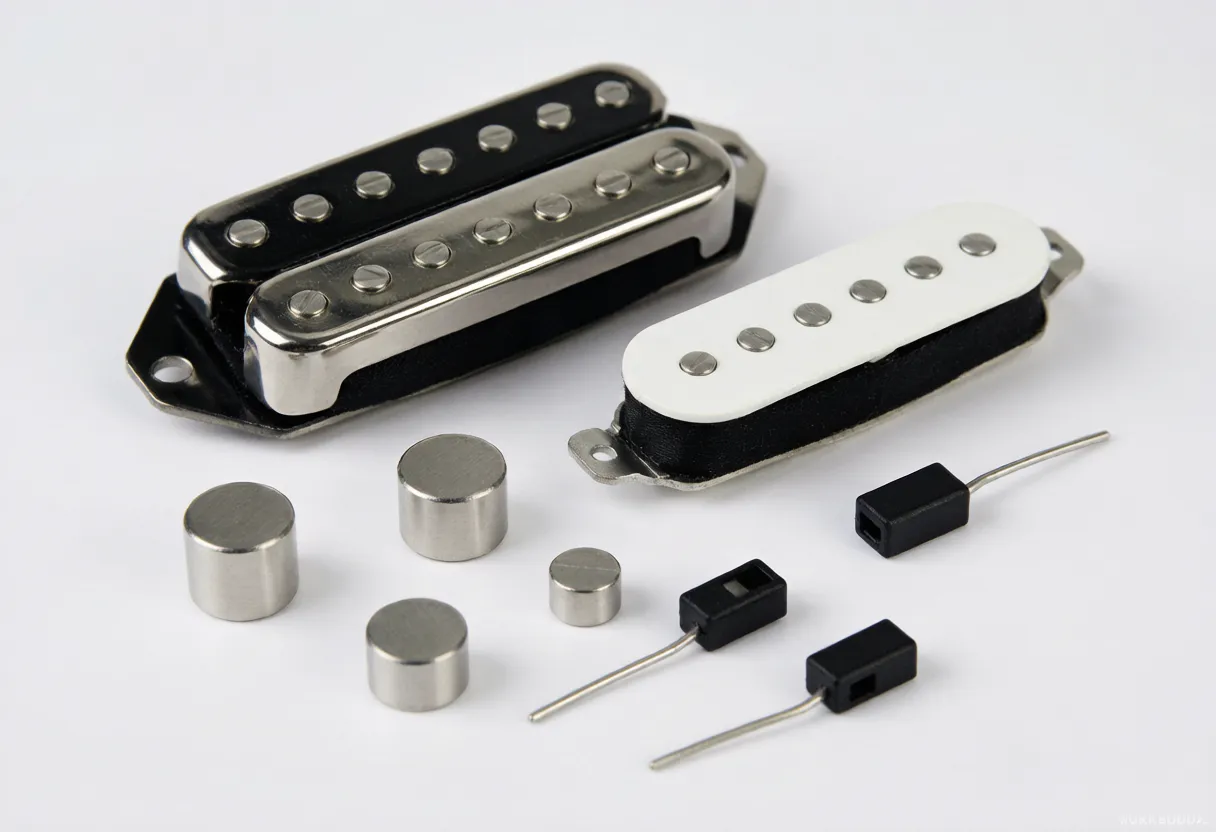 SELECTION GUIDEApplication selection notesExplore applications and requirements
AlNiCo remains useful for instruments and sensors that require low reversible temperature drift, subject to magnetic-circuit and grade review.
Published reference data. Curie-temperature values in °F are calculated from the retained °C values using °F = 1.8 × °C + 32. Curie temperature is not an operating-temperature limit. Confirm material grade and production route before approval.
For AlNiCo 9, the published Hci pair 1440 Oe / 139 kA/m is not an equivalent-unit pair: 1440 Oe converts to approximately 114.6 kA/m. Confirm the governing source value before using this row for design approval.
| Application | Typical Spec | Why This Material |
|---|---|---|
| Precision Instruments | Alnico 2 / 5 | Stable calibration reference over wide temp range |
| Watt-Hour Meters | Alnico 5 | Decades of drift-free measurement |
| Reed Switch Actuation | Alnico 3 | Reliable actuation from -40°C to 150°C |
| Radar & TWT | Alnico 8 / 9 | Stable fields at extreme temperatures |
| Educational & Scientific | Alnico 2 | Classic red/green painted demonstration magnets |
Two manufacturing routes with different trade-offs:
AlNiCo has low coercivity — design the magnetic circuit carefully:
Use this single reference for grade properties, application notes and available datasheets. Confirm the selected specification with engineering before ordering.
| Alloy | Process | Temp. reference* | Typical application |
|---|---|---|---|
| Alnico 2 | Cast | 450°C | General, educational |
| Alnico 5 | Cast | 450°C | Meters, instruments |
| Alnico 5-7 | Cast | 450°C | Premium cast |
| Alnico 8 | Cast | 450°C | High coercivity |
| Alnico 9 | Sintered | 450°C | Small precision parts |
*Temperature values are selection references, not part-specific limits. Confirm the grade, magnetic circuit and test conditions before specifying.
| Sintered AlNiCo – Available Grades | ||||||||||
|---|---|---|---|---|---|---|---|---|---|---|
| NEM Grade | Residual Induction Br | Coercive Force Hc | Intrinsic Coercive Force Hci | Maximum Energy Product (BH)max | Max. Operating Temp.* | |||||
| Nominal kG | Nominal T | Nominal Oe | Nominal kA/m | Minimum Oe | Minimum kA/m | Nominal MGOe | Nominal kJ/m³ | Nominal °C | Nominal °F | |
| Alnico 2 | 7.0 | 0.70 | 500 | 40 | 540 | 43 | 1.5 | 12 | 450°C | 840°F |
| Alnico 5 | 11.0 | 1.10 | 600 | 48 | 600 | 48 | 4.25 | 34 | 450°C | 840°F |
| Alnico 8 | 8.8 | 0.88 | 1,530 | 121 | 1,600 | 127 | 5.25 | 42 | 450°C | 840°F |
| * The listed maximum operating temperatures are based on an adequate Length to Diameter ratio or a properly designed magnetic circuit. The listed values are for reference and validation must occur before one chooses a design path. Please consult a Ningbo Empire technical representative before selecting or designing with AlNiCo magnet alloy. | ||||||||||
| Cast AlNiCo – Available Grades | ||||||||||
|---|---|---|---|---|---|---|---|---|---|---|
| NEM Grade | Residual Induction Br | Coercive Force Hc | Intrinsic Coercive Force Hci | Maximum Energy Product (BH)max | Max. Operating Temp.* | |||||
| Nominal kG | Nominal T | Nominal Oe | Nominal kA/m | Minimum Oe | Minimum kA/m | Nominal MGOe | Nominal kJ/m³ | Nominal °C | Nominal °F | |
| Alnico 5 | 12.2 | 1.22 | 600 | 48 | 630 | 50 | 5.0 | 40 | 500°C | 930°F |
| Alnico 5B | 12.2 | 1.22 | 650 | 52 | 660 | 53 | 5.5 | 44 | 500°C | 930°F |
| Alnico 5 DG | 12.5 | 1.25 | 690 | 55 | 700 | 56 | 6.5 | 52 | 500°C | 930°F |
| Alnico 5-7 | 13.0 | 1.30 | 700 | 56 | 740 | 59 | 7.5 | 60 | 525°C | 980°F |
| Alnico 8-HC | 7.0 | 0.70 | 1,750 | 139 | 1,750 | 139 | 4.5 | 36 | 525°C | 980°F |
| Alnico 8 | 8.2 | 0.82 | 1,500 | 119 | 1,600 | 127 | 5.0 | 40 | 525°C | 980°F |
| Alnico 8B | 8.8 | 0.88 | 1,500 | 119 | 1,650 | 131 | 5.5 | 44 | 525°C | 980°F |
| Alnico 8C | 9.0 | 0.90 | 1,380 | 110 | 1,440 | 115 | 7.5 | 60 | 525°C | 980°F |
| Alnico 9 | 10.5 | 1.05 | 1,410 | 112 | 1,440 | 139 | 9.0 | 72 | 525°C | 980°F |
| * The listed maximum operating temperatures are based on an adequate Length to Diameter ratio or a properly designed magnetic circuit. The listed values are for reference and validation must occur before one chooses a design path. Please consult a Ningbo Empire technical representative before selecting or designing with AlNiCo magnet alloy. | ||||||||||
| Reversible Temperature Coefficient for Cast and Sintered AlNiCo | ||
|---|---|---|
| Temperature Range (°C) | Induction Br (α) (%)/°C | Intrinsic Coercivity Hci (β) (%)/°C |
| 20°C to 150°C | -0.02 to -0.03 | -0.02 to -0.03 |
| α = Δ Br / Δ T × 100 (Br @ 20°C) [ΔT = 20°C – 150°C] β = Δ Hci / Δ T × 100 (Hci @ 20°C) [ΔT = 20°C – 150°C] | ||
| AlNiCo Magnets – Physical Properties | |||
|---|---|---|---|
| Property | Units | Value Sintered AlNiCo | Value Cast AlNiCo |
| Vickers Hardness | Hv | 440 | 440-620 |
| Density | g/cm³ | 6.8 – 7.0 | 6.9 – 7.3 |
| Curie Temp TC | °C | 810 – 860 | 740 – 860 |
| Curie Temp TF | °F | 1,490 – 1,580 | 1,364 – 1,580 |
| Specific Resistance | μΩ·Cm | 50-70 | 45 – 75 |
| Bending Strength | kN/mm² | 0.35 – 0.76 | 0.05 – 0.31 |
| Tensile Strength | kN/mm² | 0.35-0.45 | 0.02 – 0.15 |
| Thermal Expansion | °C-1 | +11.0 to +12.4 ×10⁻⁶ | +11.0 to +13.0 ×10⁻⁶ |
| The listed values are approximate and should be used as a reference. Any magnetic or physical characteristics should be substantiated before selecting a magnet material. Please engage a Ningbo Empire engineer before selecting a design path. | |||
Cast and sintered routes remain separate. Temperature limits require an adequate length-to-diameter ratio and a suitable magnetic circuit. Grouped headers, nominal/minimum distinctions and all original design notes are retained.
Evaluate AlNiCo temperature stability together with coercivity, circuit geometry and demagnetization risk.
Compare magnet materialsAlNiCo's magnetic mechanism — shape anisotropy of elongated FeCo particles in a NiAl matrix — is inherently temperature-insensitive. Its Curie temperature of 850°C is 3× that of NdFeB (310°C), so normal operating temperatures barely affect the magnetic structure.
The same physics that gives temperature stability gives low resistance to demagnetization. AlNiCo magnets must be magnetically 'long' (high L/D ratio) so they operate at a favorable point on their demag curve. Short or disc-shaped AlNiCo magnets will partially demagnetize themselves.
Absolutely — when temperature stability is critical. Electric meters, aerospace sensors, radar systems, and scientific instruments still rely on AlNiCo because AlNiCo offers low reversible temperature drift for selected instrument and sensor designs.. It also handles 450°C+, far beyond NdFeB or SmCo.
Yes — cast AlNiCo pours into nearly any geometry: horseshoes, E-cores, rings with poles, complex 3D shapes. This eliminates assembly operations that rare-earth magnets require. Send your drawing for a quote.
AlNiCo is available cast (complex shapes) or sintered (small precision parts):
Cast AlNiCo is near-net-shape; grinding only on functional faces:
| Process | Typical Tolerance | Notes |
|---|---|---|
| As-cast | ±0.3–0.5 mm | Most economical |
| Ground | ±0.05 mm | Pole faces and mounting faces |
| Sintered | ±0.05 mm | Precision small parts |
| Machinability | Note | Cast AlNiCo is hard — machining by grinding only |
What ships with your parts — scoped per project during quotation.
Certificate of Analysis with measured Br / Hcb / Hcj / (BH)max against the specified grade of your AlNiCo parts, from our demagnetization-curve test equipment.
Dimensional reports by gauge or CMM as agreed in the inspection plan; critical dimensions identified together during DFM review.
RoHS / REACH declarations on request, and FAI / PPAP documentation per project requirements.
Specify critical characteristics, sampling and acceptance criteria so the requested records match your part and application.
Plan the quality reviewProcess reference images are separated from the product gallery. They illustrate equipment and handling topics; they do not establish ownership of a facility, a customer delivery, or project-specific inspection results.
Cast and sintered AlNiCo require controlled alloy melting, heat treatment, finish machining and material verification before protective packing.
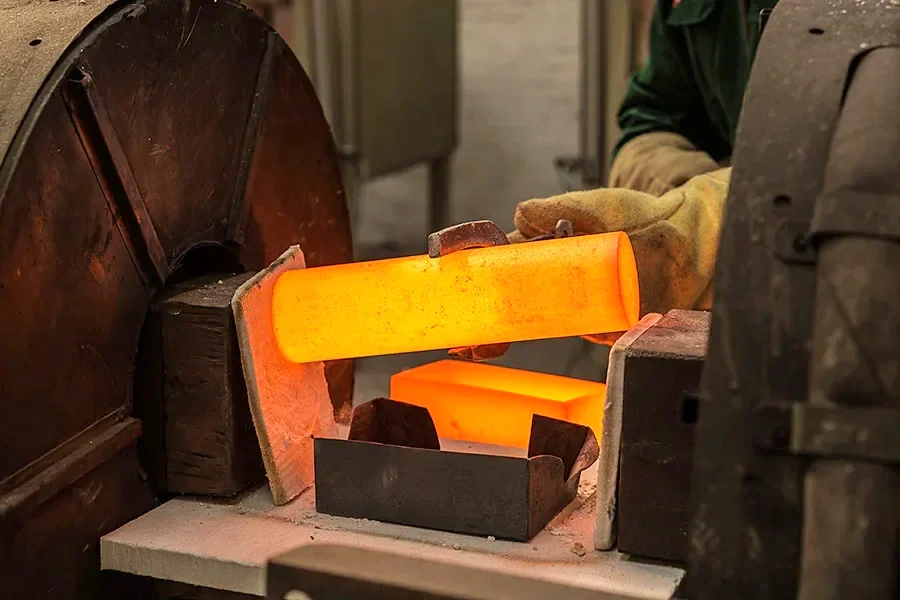
Glowing alloy castings leave the furnace before shakeout and controlled cooling.
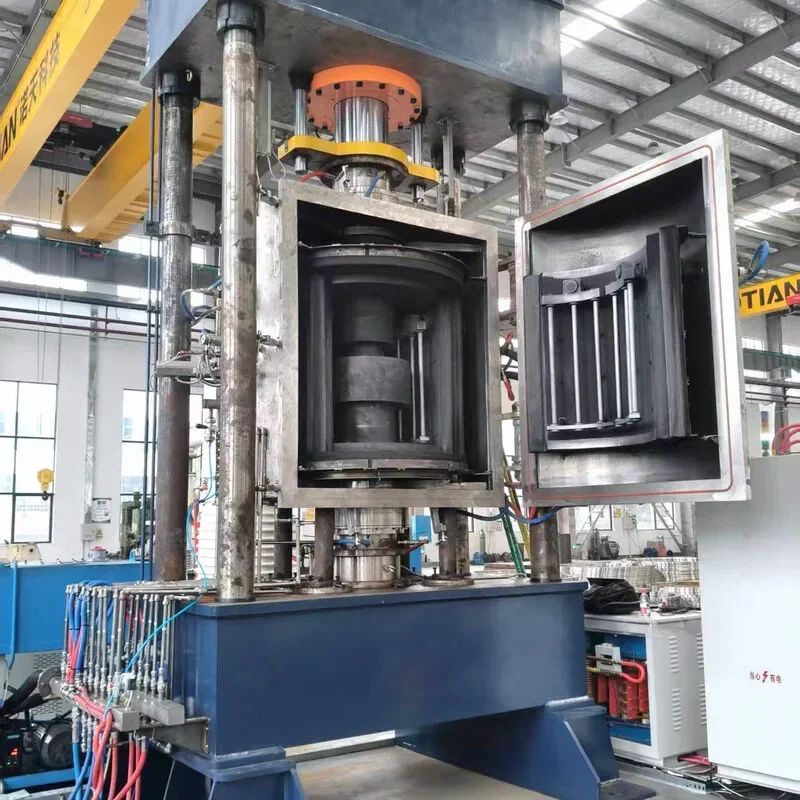
Vacuum hot-press equipment supports sintered routes and special geometries.
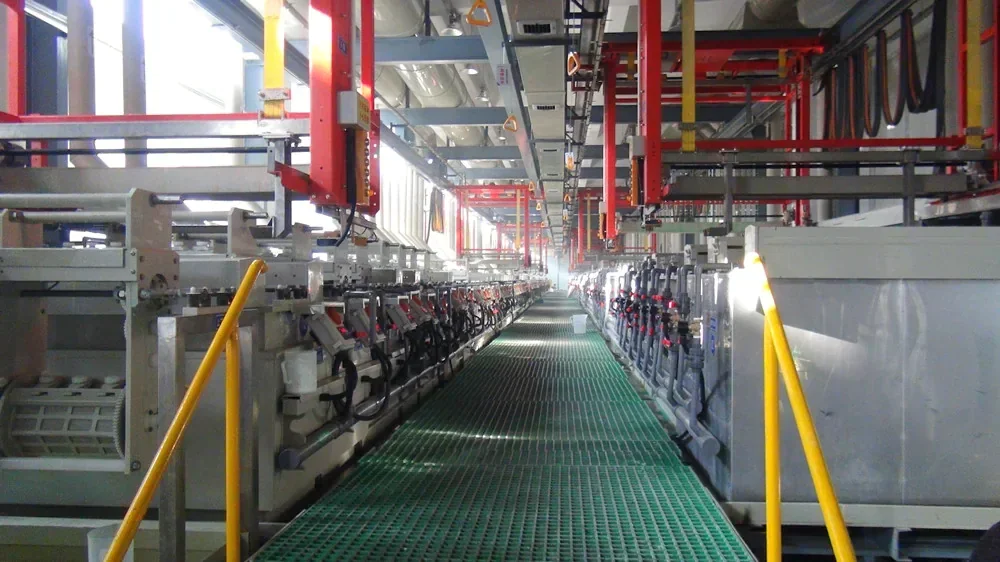
Programmed thermal treatment stabilizes alloy structure and magnetic response.
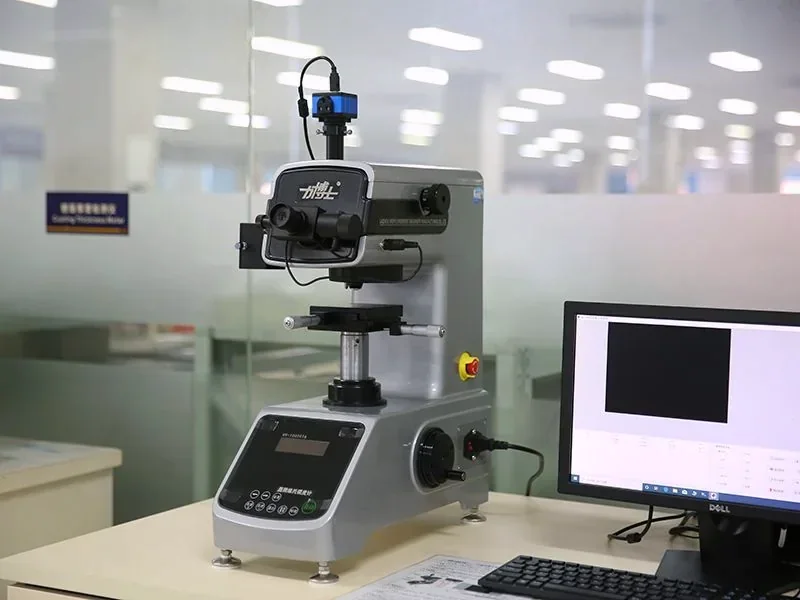
Hardness and surface condition are checked after heat treatment and finishing.
Send it to our team for engineering review and quotation — grade recommendation included.