Projected area and geometry
Review filling distance, section transitions, joining surfaces and machining access.
 Request a Quote
Structural part review
One-piece structural aluminum castings planned around projected area, filling distance, load paths, joining interfaces and dimensional control — supported by presses up to 4,400T.
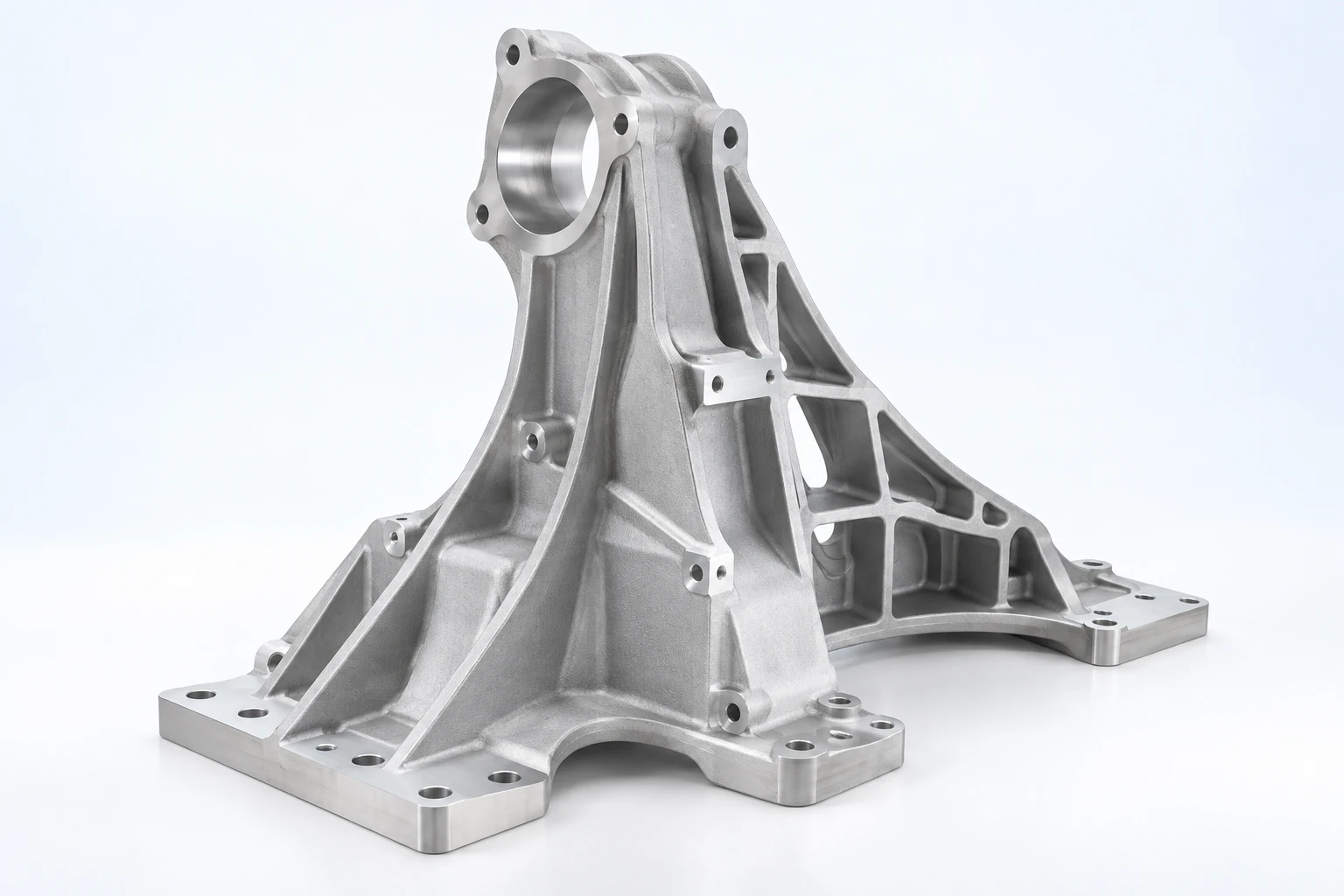
Define the supplied condition, critical dimensions and acceptance plan in the drawing review. Published process references depend on material, geometry and the agreed order scope.
Large-tonnage cells up to 4,400T within the 50-machine network
Projected-area, fill, venting and distortion review
Trimming, machining and joining-interface preparation
CMM, gauges and project NDT strategy
Review filling distance, section transitions, joining surfaces and machining access.
Confirm machine and site suitability against the proposed geometry and production demand.
Define datums, distortion-sensitive features, fixtures and final inspection.
Machine tonnage alone does not establish maximum part dimensions, mass or available production capacity. The proposed part must be reviewed against the assigned machine and site.
Feature review
The ribbed bracket joins a broad mounting flange to the base and its locating bosses. Mark load introduction, joining faces and datum features so the structural review follows the interfaces around the part.
Review rib transitions alongside machining access and fixture support. The complete drawing, alloy choice and agreed acceptance plan determine the production route; the local detail does not define the full casting envelope.
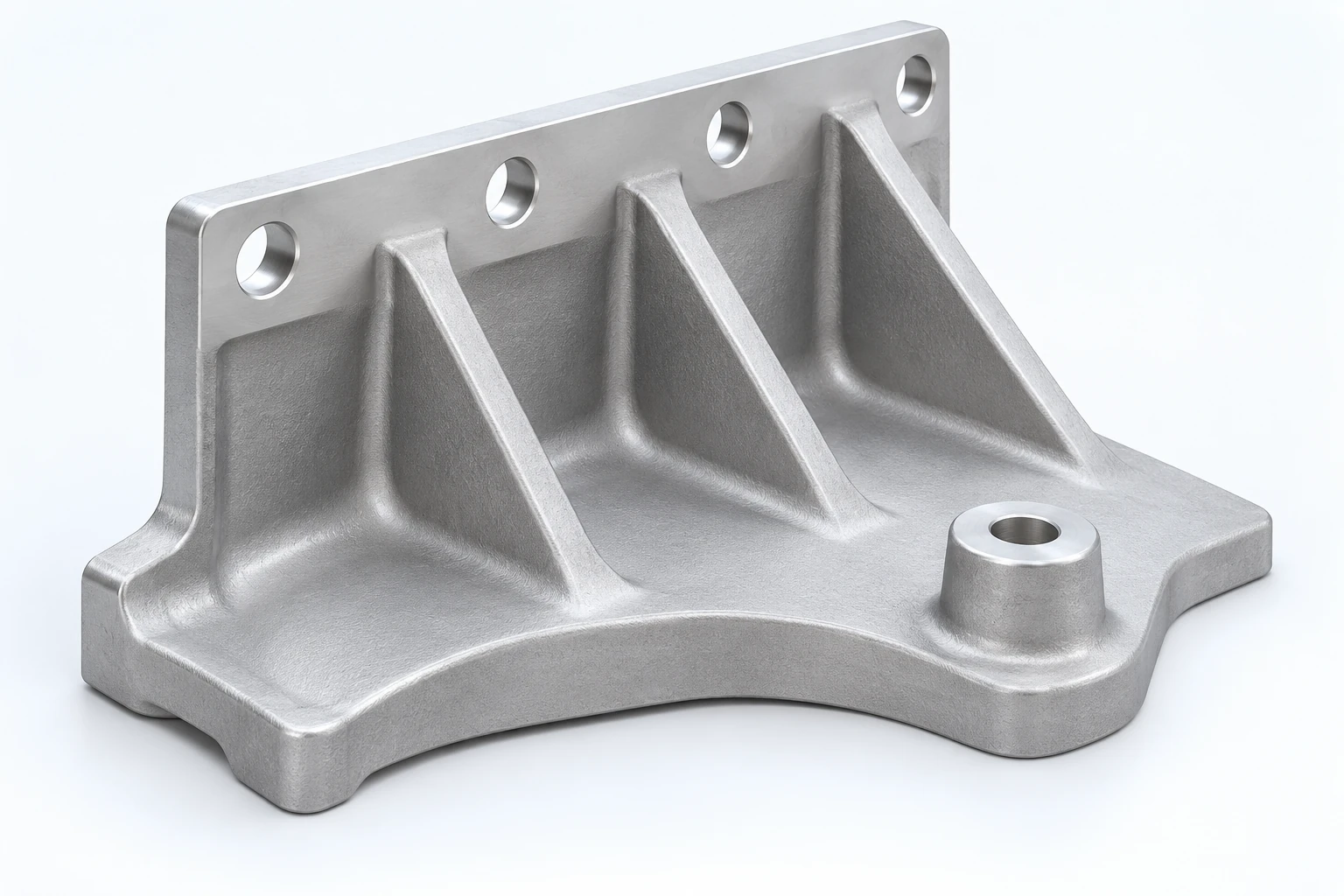
Consider filling distance, ribs and section transitions.
Define trimming, datum and attachment interfaces.
Specify dimensional and soundness checks for the structural duty.
Review together: part envelope and projected area; ribs, joining flanges and machining access; distortion and inspection requirements.
Open structural frame form with ribbed joining interfaces.
Long ribbed crossmember form.
Open floor-frame form with mounting interfaces.
Large structural die castings are evaluated using projected area, cavity pressure, filling distance, wall transitions, load paths and joining flanges. Ningbo Empire can route suitable programs through a coordinated aluminum HPDC network with press capacity up to 4,400T.
Before geometry is frozen, share the CAD model, target alloy, casting weight, annual volume, load cases, datum strategy and joining method. Early foundry review can reduce fill risk, simplify trimming and improve dimensional stability without presenting a project guarantee before validation.
No. Press selection depends on projected area, cavity pressure, geometry, overflow design and safety margin; the smallest robust route is preferred.
Before geometry is frozen. Early review can simplify rib networks, joining flanges, machining datums, venting and ejection while reducing tool risk.
Send the part drawing, functional interfaces, operating conditions and production requirements.
Send the model, volume and critical requirements for engineering review and a project-specific quotation.