RF cavities
Review partition geometry, machined surfaces and the conductor or plating requirements.
 Request a Quote
RF cavities + outdoor enclosures
Outdoor aluminum enclosures that combine RF partitioning, thermal dissipation, EMI continuity and environmental sealing in a production-ready casting.
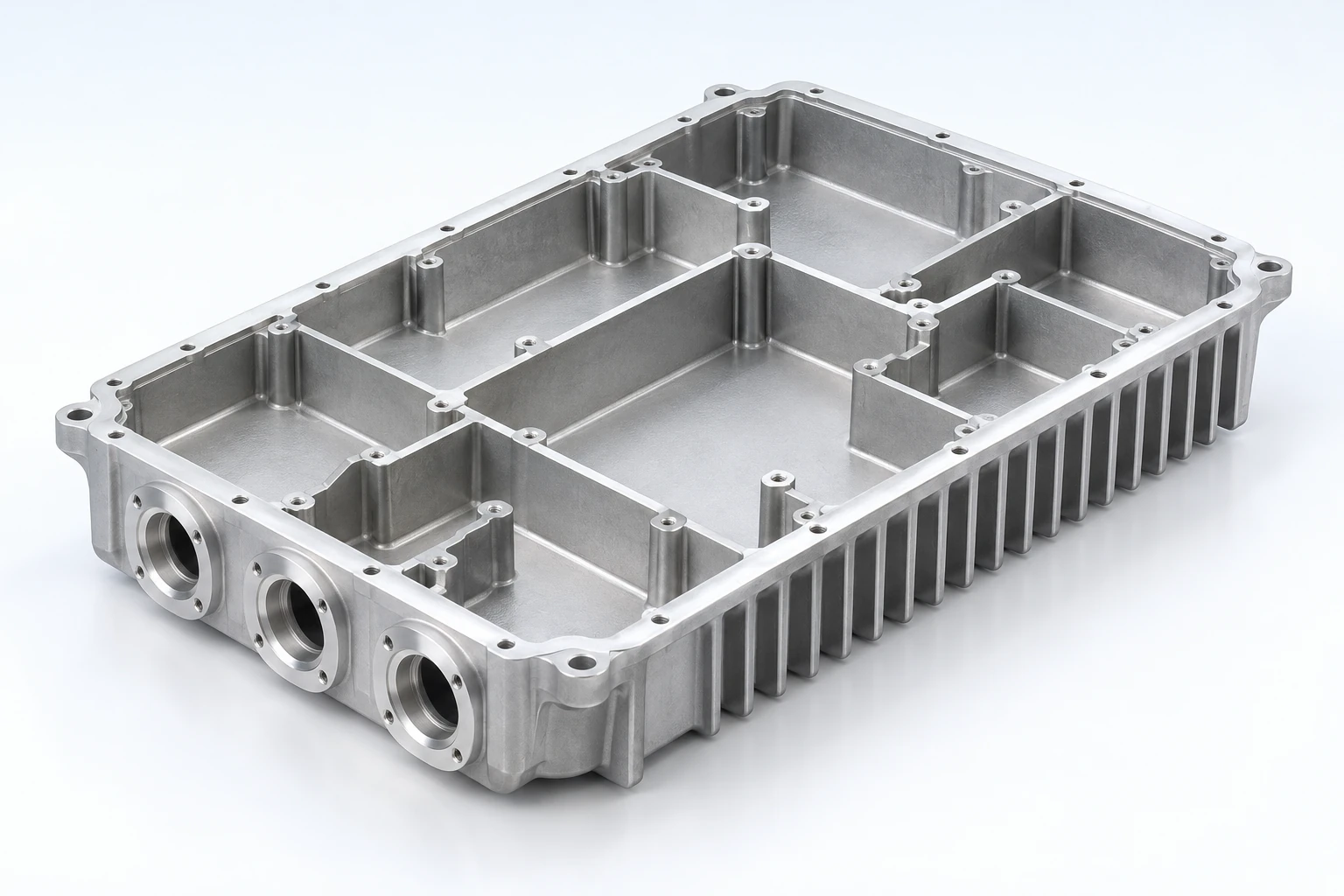
Define the supplied condition, critical dimensions and acceptance plan in the drawing review. Published process references depend on material, geometry and the agreed order scope.
Feature review
The divided cavity form makes partition walls, cover contact lands and fixing locations visible. Review these interfaces together with the conductor or plating requirements for the proposed RF assembly.
Distinguish surfaces requiring electrical contact from areas receiving protective finish. The cavity drawing and the assembled-product test plan establish the acceptance requirements.
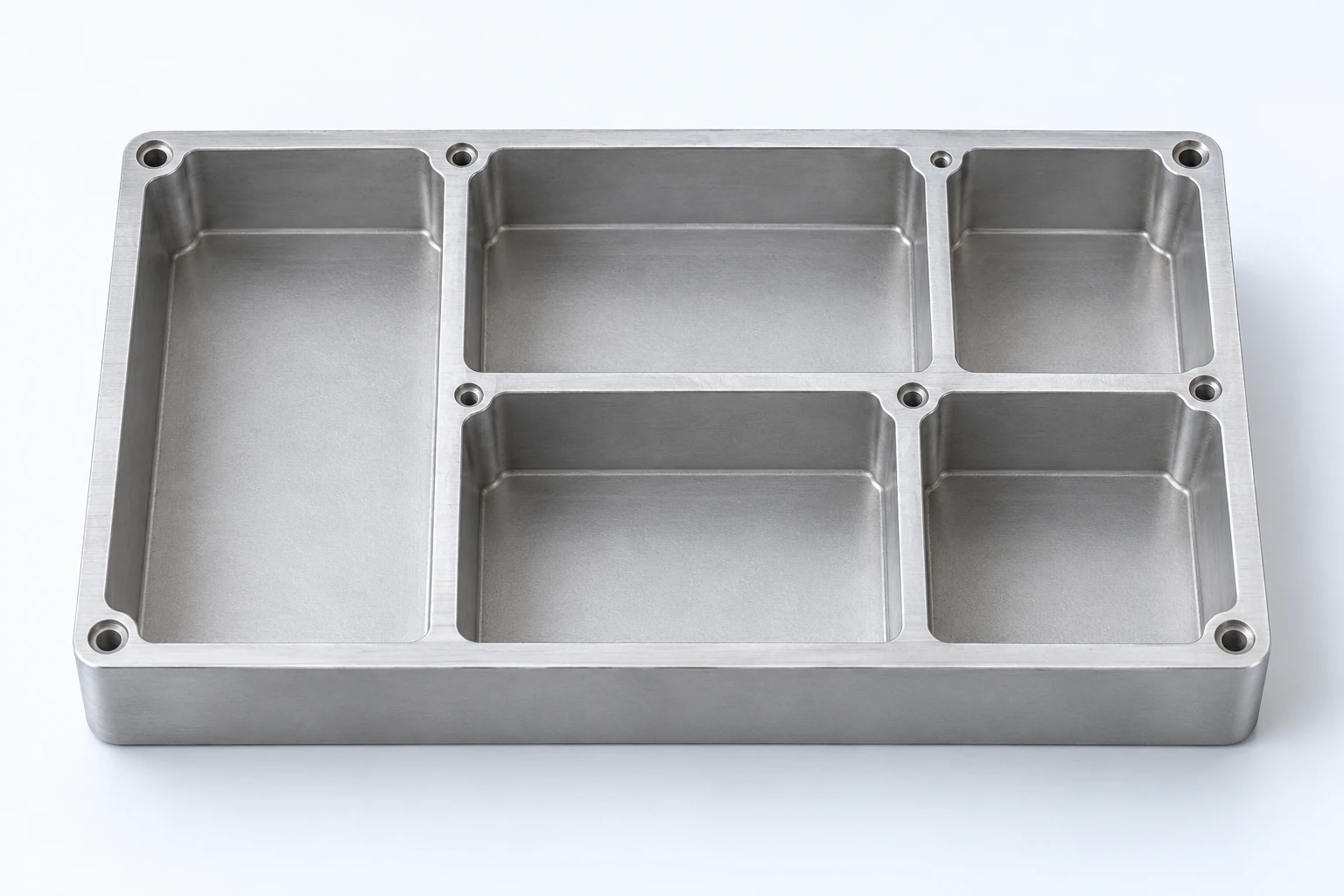
Review partition geometry, machined surfaces and the conductor or plating requirements.
Define cable entries, gaskets, mounting features and the agreed environmental tests.
Identify contact surfaces, bare-metal interfaces and coating-mask areas.
RF, electromagnetic shielding and environmental-protection outcomes depend on the assembled design and agreed testing—not the enclosure photograph alone.
Cast fins, machined thermal pads and interface control
Partition walls and cavity faces machined to drawing
Gasket grooves, ports and project-defined ingress testing
Masked grounding zones and cosmetic powder coat
Review partitions, cavities and machined contact faces.
Define fin geometry and thermal-pad interfaces.
Agree grounding masks, gasket lands and ingress-test requirements.
Review together: rf partitions and connector access; thermal faces and sealing lands; finish, corrosion and inspection requirements.
Partitioned RF-cavity form with mounting holes.
Two-part finned enclosure with perimeter flange.
Finned chassis with internal partitions and connector face.
A telecom or 5G die-cast enclosure must balance thermal fins, RF cavity geometry, EMI grounding, gasket compression and outdoor corrosion protection. Casting draft, fin spacing and machined RF faces are reviewed together so thermal and electrical requirements do not conflict with manufacturability.
Ningbo Empire reviews heat load, IP target, connector layout, coating-free grounding zones and annual volume before confirming alloy, press size, machining, conversion coating, powder coating and ingress-test scope.
Yes. Masking zones, conversion coating and contact resistance requirements should be identified on the drawing.
The agreed plan may include dimensional inspection, coating checks, gasket-interface inspection and project-defined leak or ingress testing.
Send the part drawing, functional interfaces, operating conditions and production requirements.
Send the model, volume and critical requirements for engineering review and a project-specific quotation.