As-cast detail
Review thin sections, small bosses, threads and edge conditions.
 Request a Quote
Compact precision forms
High-detail zinc alloy components for compact mechanisms and hardware where thin walls, stable dimensions, surface finish and integrated features matter.
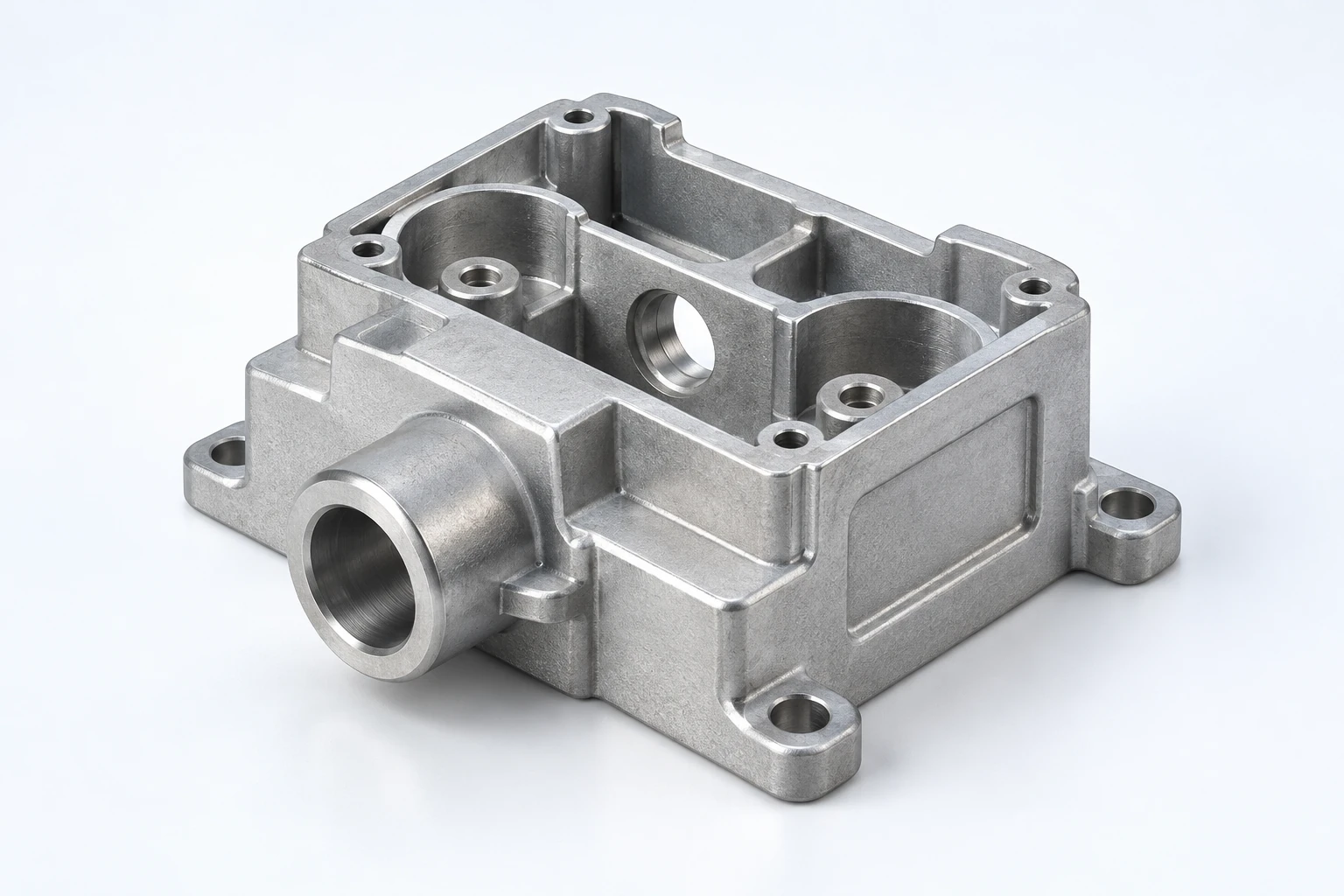
Define the supplied condition, critical dimensions and acceptance plan in the drawing review. Published process references depend on material, geometry and the agreed order scope.
Review thin sections, small bosses, threads and edge conditions.
Agree polishing, plating, masking and the dimensions affected by finish thickness.
Define fit, appearance samples, corrosion testing and functional checks.
Production route, manufacturing responsibility, available documentation and acceptance criteria are confirmed for the particular product and order.
Feature review
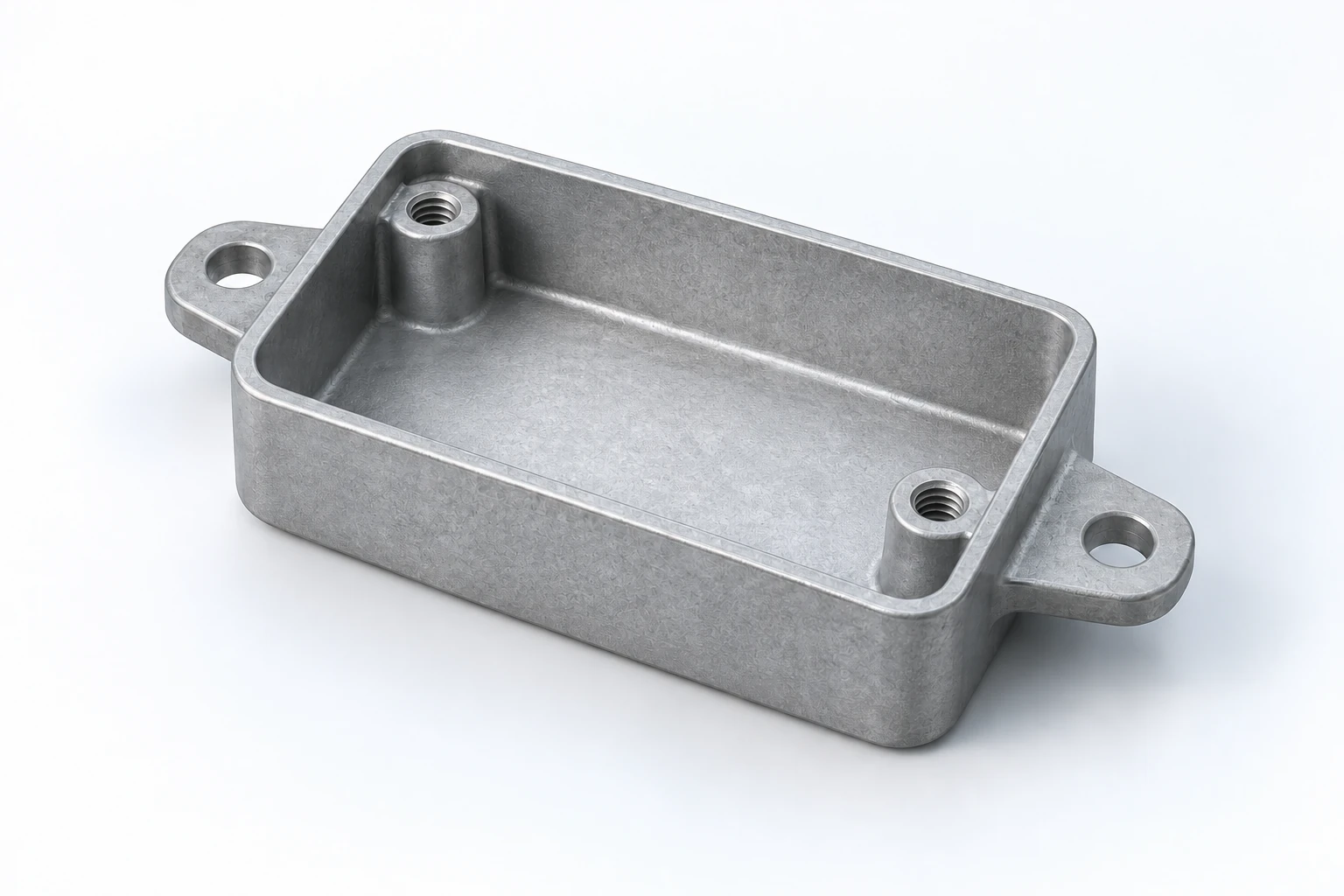
The compact shell shows small bosses, threaded features and external fixing ears. Review thread engagement, tool access and the edge conditions that affect assembly before agreeing the finishing route.
Identify dimensions measured before finish and those accepted after plating or coating. Keep appearance samples and functional mating checks linked to the same delivered condition.
Four zinc die-casting machines from 88T to 160T
Thin walls, small bosses, fine features and sliding cores where required
Deburring, polishing, plating and cosmetic control
Pins, springs, fasteners and functional checks by project
Check small bosses, thin sections and tool access.
Define plating, cosmetic surfaces and mating clearances.
Inspect bores, threads and mechanism interfaces.
Review together: alloy, walls and threaded features; bores, mating faces and mechanism access; plating, appearance and dimensional checks.
Connector-shell form with mounting ears.
Compact gear-housing form with bearing bores.
Ribbed mechanism-bracket form with mounting holes.
Zinc die casting is suited to compact components with thin walls, fine features, stable dimensions and plated cosmetic surfaces. Our strategic manufacturing network includes four zinc die-casting machines from 88T to 160T; the producing site is confirmed during project review. for locks, connector shells, gear housings and mechanism parts.
The quotation should define Zamak grade, part weight, annual volume, critical dimensions after plating, corrosion target and cosmetic zones. Tool design, trimming, polishing and plating allowances are reviewed as one production route.
Zinc suits small, detailed parts requiring thin walls, dimensional stability and high-quality plated finishes. Weight and material cost must still be considered.
Yes. Nickel, chrome and other systems are common, but pretreatment, thickness, rack marks and cosmetic zones should be defined before quotation.
Send the part drawing, functional interfaces, operating conditions and production requirements.
Send the model, volume and critical requirements for engineering review and a project-specific quotation.